Do Gutter Guards Work?
Cleaning gutters is a hard and messy job. Every fall, you climb a ladder and pull out wet, heavy leaves by hand. Gutter guard companies say their products can end this chore for good. But do gutter guards work as well as they say? Or will you spend a lot of money and still have to clean your gutters?
In this guide, we answer the question “do gutter guards work?” in plain words. We’ll show you the six main types of gutter guards and how each one works. You’ll also see the real pros and cons and what gutter guards cost in 2026. Then we’ll compare the cost of gutter guards vs gutter cleaning. By the end, you’ll know if gutter guards are right for your home.
Quick answer: Yes, gutter guards work, but some work much better than others, and none of them are perfect. A good micro-mesh guard that’s installed the right way keeps out most leaves, twigs, and pine needles. It can cut your gutter cleaning from twice a year to a quick rinse every year or two. Cheap foam and brush guards work for a few seasons, then clog. No gutter guard is 100% maintenance-free.
What Are Gutter Guards?
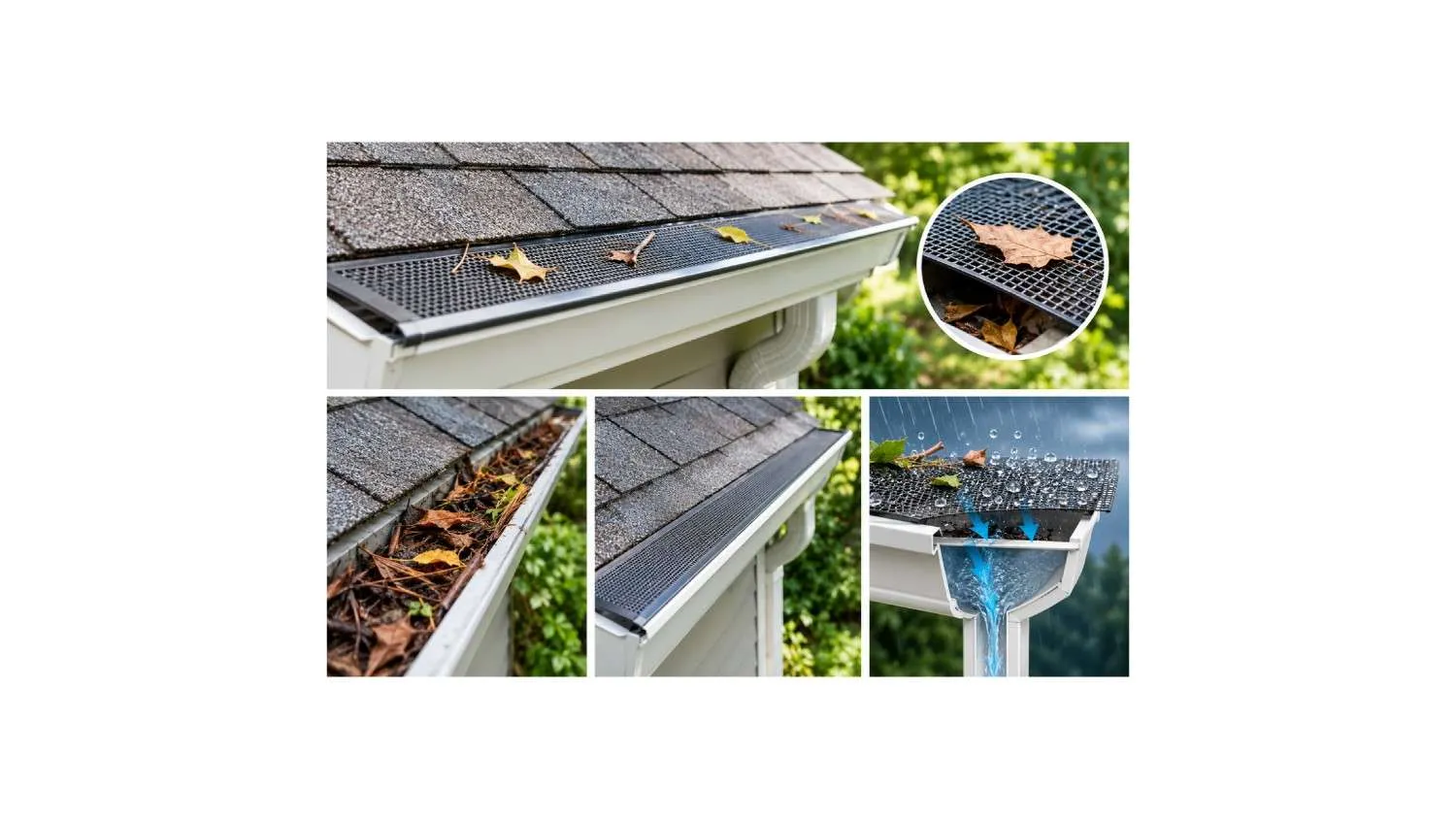
Gutter guards are covers or inserts that go on top of, or inside, your gutters. You may also hear them called gutter covers, gutter protection, gutter protectors, or leaf guards. Their job is simple: let rainwater in and keep leaves, twigs, pine needles, seeds, and other junk out.
Your gutters catch the rain that runs off your roof. Then they send it down the downspouts and away from your house. When leaves and dirt fill up the gutter, the water has nowhere to go. It spills over the edge. That can rot the wood behind your gutters (called the fascia board), stain your siding, wash out your flower beds, and leave puddles next to your foundation. Wet leaves and ice are also heavy. Over time, that weight can make gutters sag, crack, or pull away from the house.
A gutter guard blocks most of this debris before it gets in. Water keeps flowing to the downspouts, and you don’t have to clean your gutters nearly as often. Most guards are made of aluminum, stainless steel, vinyl (plastic), foam, or nylon bristles. The material makes a big difference in how long they last and how well they work.
Do Gutter Guards Work? The Short Answer
So, do gutter guards work? Yes, they do one job very well: they keep big debris out of your gutters so water can reach the downspouts. Clogged gutters are the main reason gutters overflow and pull away from the house, so that’s a big deal.
But gutter guards won’t make your gutters care-free. Small stuff like roof grit, pollen, seed pods, and dust can still land on top of the guard or slip through it. Over time, this buildup can slow the water down, especially on cheaper guards. How well gutter guards work at your house depends on three things:
- The type of guard. Fine micro-mesh and reverse-curve guards work better than basic screens, foam, and brushes.
- The trees near your home. Big oak and maple leaves are easy to block. Pine needles and small “helicopter” seeds are much harder.
- How well it’s installed. A guard set at the wrong angle can make water spill over the edge in heavy rain.
How Gutter Guards Work
Every gutter guard works like a barrier. Rain runs off the roof and goes through or around the guard. Leaves and twigs stay on top. Most of that debris then dries out and blows away in the wind.
There are two basic designs:
- Filter-style guards (screens, micro-mesh, foam, and brushes) let water drop through small holes or gaps and keep debris on top.
- Surface-tension guards (also called reverse-curve or “helmet” guards) cover the whole gutter. Water sticks to a rounded front edge and curls down into a thin slot. Leaves slide off the edge and fall to the ground.
Knowing which design a product uses is the first step to answering “do gutter guards work for my home?” Each design acts a little differently depending on your weather and your trees.
Types of Gutter Guards Compared
Before you decide whether gutter guards are worth it, you need to know what you’re buying. The answer to “do gutter guards work?” changes from one type to the next. Most types of gutter guards fit into six groups. The table below gives you a quick look. The sections after it explain how each one really holds up on a roof.
| Type | Installed cost (per foot) | How long it lasts | Stops pine needles? | Best for | Main problem |
|---|---|---|---|---|---|
| Screens (plastic or metal) | $1 to $6 | Plastic: about 5 years. Metal: 10+ years | No | Big leaves, low budgets | Seeds, grit, and needles get through |
| Micro-mesh (aluminum or stainless steel) | $6 to $13 | 15 to 30 years | Yes | Almost every home, especially near pines | Costs more; pollen can coat the mesh |
| Reverse-curve / solid covers | $5 to $9 | 20+ years | Mostly | Lots of leaves from oak or maple trees | Bulky look; water can shoot past in very hard rain |
| Foam and filter inserts | $3 to $5 | 2 to 5 years | Partly | Quick, short-term DIY fix | Debris piles on top; stays wet |
| Brush inserts | $4 to $6 | 2 to 5 years | No | Few trees, easy DIY | Needles get stuck; bristles wear out |
| Hooded gutter systems (gutter and cover in one) | Often $15 to $45+ | Often come with a lifetime warranty | Mostly | Homes that need new gutters anyway | Highest cost; you replace the whole gutter |
Typical 2026 installed price ranges. Big-name brand systems usually cost a lot more (see the cost section below).
1. Gutter Screens
How they work: A screen is a sheet of plastic or metal with holes in it. It snaps onto the front edge of the gutter or slides under the first row of shingles. Water drops through the holes, and leaves stay on top.
The downside: Anything smaller than the holes falls right through. That includes seeds, roof grit, bugs, and pine needles. Big wet leaves can also sit on the flat screen like a shelf and block the water. Plastic screens can sag in the summer heat and crack in the cold.
Bottom line: A cheap upgrade for a one-story home with only leafy trees nearby. Not a long-term fix if you want to stop cleaning your gutters.
2. Micro-Mesh Gutter Guards
How they work: A very fine metal mesh (stainless steel or aluminum) is stretched over a strong frame. The holes are so tiny that leaves, pine needles, roof grit, and most seeds can’t get in. Water still flows through easily.
The downside: Pollen, dust, and tree sap can leave a thin layer on the mesh that slows the water down. A quick brush or rinse once or twice a year fixes this. Cheap, flat mesh with a weak frame can also sag. In 2026 hands-on product tests, the stronger, raised designs handled big storms well. Some budget products let water spill over the edge.
Bottom line: If you’re asking “do gutter guards work in the long run?”, a well-made micro-mesh guard is your best bet.
3. Reverse-Curve and Solid Gutter Covers
How they work: A solid metal cover curves over the top of the gutter. Rain sticks to the rounded front edge and flows down into a thin slot underneath. Leaves slide off and fall to the ground.
The downside: In a very heavy downpour, fast water can shoot right past the curve instead of going into the gutter. Small seeds and grit can still slip into the slot, and you have to take the cover off to clean them out. These covers are also bulky and easy to see from the street. Some older styles are nailed under or through the shingles, which can cause problems with your roof warranty.
Bottom line: Great for homes under oak and maple trees. Pick a newer style that attaches to the gutter or the fascia board, not the roof.
4. Foam and Filter Inserts
How they work: These go inside the gutter instead of on top of it. Foam inserts are long, triangle-shaped blocks. Filter inserts use a thick layer of fiber or a fine screen. Water soaks through, and debris is supposed to stay on top.
The downside: Because they’re so dense, leaves and needles pile up on top instead of blowing away. Add heavy spring pollen, and water may not get in at all during a hard rain. Instead, it pours over the front of the gutter. Foam also stays wet, can grow moss and even small plants, and breaks down in the sun.
Bottom line: A cheap, short-term fix. Plan to clean them often and replace them in a few years.
5. Brush Gutter Guards
How they work: Long, round brushes lie inside the gutter, like giant pipe cleaners. Leaves sit on the bristles, and water flows underneath.
The downside: Pine needles, seeds, and small twigs get tangled in the bristles. To clean them, you have to pull the brushes out and shake them, which can be more work than cleaning an open gutter. The bristles also fade and flatten from sun, rain, and melting snow. And you can often see them from the ground.
Bottom line: The cheapest and easiest to put in, but almost never the cheapest over time.
6. Hooded Gutter Systems
How they work: Instead of adding a guard to your old gutters, these replace your gutters with a new gutter that has a cover built in. Most use a solid hood with a curved front edge. Many attach to the fascia board instead of the roof. Some also have a channel in the back so melting snow can still drain into the gutter.
The downside: These are usually sold and installed by one brand, so prices are high and hard to compare. You’re also paying for brand-new gutters, which only makes sense if your current ones are old or worn out.
Bottom line: Worth a look if you need new gutters anyway. Get quotes from at least two brands and read exactly what the “no-clog” warranty covers.
How a Guard Is Attached Matters Just as Much as the Type
Two guards of the same type can work very differently depending on how they’re attached:
- Under the shingles: The back edge slides under the first row of shingles. This can lift or crack shingles. If nails go through the roof, it may also break the terms of your roof warranty.
- On the gutter or fascia: The guard clips onto the gutter or screws into the fascia board, so your roof isn’t touched. This is the safer choice for most homes.
No matter which type you pick, ask the installer how it attaches, and check your roof warranty before any work starts.
Gutter Guard Pros and Cons
Here’s an honest look at gutter guard pros and cons, based on how they work on real homes, not in sales brochures. Compare both lists to your own home to decide if gutter guards work well enough to be worth the money.
Pros
- Much less cleaning. A good guard can cut gutter cleaning from twice a year to a quick rinse now and then.
- Less time on a ladder. According to the CDC, more than 500,000 people in the U.S. are treated for ladder injuries every year, and about 300 die. Fewer trips up the ladder means less risk.
- Fewer clogs and overflows. Water gets to the downspouts. That protects your fascia, siding, yard, and foundation.
- Fewer pests. Covered gutters give birds, mice, and mosquitoes fewer places to nest or breed in standing water.
- Less weight on your gutters. Wet leaves and ice are heavy. Keeping them out helps stop sagging.
- They last a long time. Metal micro-mesh and reverse-curve guards can last 20 years or more.
Cons
- High upfront cost. Professional systems can cost thousands of dollars.
- Not maintenance-free. Grit, pollen, and small seeds still build up on top and need to be brushed or hosed off.
- Harder to clean when they do clog. If something gets under the guard, you have to take it off first.
- Possible roof warranty problems. Guards that go under or nail through shingles may affect some roof warranties. Ask your roofer first.
- Snow and ice. In cold areas, some guards can hold snow and add to ice buildup along the roof edge.
- Cheap types fail fast. Foam and brush guards often clog within a few seasons.
When Do Gutter Guards Work Best, and When Don’t They?
The same guard can work great on one house and poorly on the next. Here’s how gutter guards work in the most common situations.
Pine Needles
Pine needles are the hardest test. They slide through screens and poke into foam and brushes. Only fine micro-mesh keeps them out well. If you have pine trees near your house, skip the cheap guards.
Heavy Rain
In a downpour, the guard has to let water in as fast as it comes off the roof. Good micro-mesh with a raised surface and well-installed reverse-curve guards handle this well. Flat mesh covered in pollen or grit can make water run over the edge. In very rainy areas, bigger downspouts help too.
Snow and Ice
No gutter guard stops ice dams. Those are caused by heat escaping through your roof. Strong metal guards hold up to heavy snow better than plastic ones. If you live in a cold area, choose a sturdy guard that attaches to the fascia, and ask the installer how it handles ice.
Only a Few Trees
If you have just a few trees nearby, you may not need gutter guards at all. One or two professional cleanings a year might cost less than any guard.
What Experienced Gutter Installers Say
Ask people who have installed gutter guards for decades, and you’ll hear a more skeptical view than you get from sales brochures. Some veteran contractors and roofers say that no gutter guard works perfectly, and a few say they would never put one on their own home. When they’re asked “do gutter guards work?”, their main points are worth knowing before you buy:
- Roof debris still ends up on the guard. Leaves, needles, and grit that land on your roof slowly slide down and sit on top of the guard. If that layer builds up, rain can sheet right over it and shoot past the gutter.
- Expensive doesn’t always mean better. Some installers say many high-end covers mostly help with large leaves, and that a basic screen also handles large leaves for far less money.
- A bad install can cause roof leaks. Guards slid under shingles or nailed through the roof can lift shingles and let water in.
- Slope matters. Guards installed at an angle, closer to the pitch of the roof, let dry debris blow off instead of piling up. Flat guards hold debris.
- Mid-priced options can work well. Some roofers favor tough, impact-resistant guards installed at a slope. These can perform close to high-end covers for about half the price and often still come with long warranties.
The honest takeaway from the pros: do gutter guards work? Yes, they cut down on cleaning, but they don’t replace care. Most installers agree you’ll still need to check and brush them off now and then.
An Alternative Some Pros Recommend: Bigger Gutters
Instead of guards, some roofers suggest upgrading to larger gutters when you replace your old ones. Most homes have 5-inch gutters with 2×3-inch downspouts. Moving to 6-inch gutters with larger 3×4-inch downspouts lets much more water and small debris flow through without clogging. Pair that with regular cleaning, and you may not need guards at all. This option makes the most sense if your gutters are old and due for replacement anyway. It’s also a good answer if you’ve asked “do gutter guards work for my home?” and decided they don’t.
Gutter Guards vs Gutter Cleaning: Which Costs Less?
This is where most homeowners make up their minds. Do gutter guards work out cheaper than just paying someone to clean your gutters? Let’s look at real numbers for gutter guards vs gutter cleaning.
What Gutter Cleaning Costs
Professional gutter cleaning costs about $160 per visit on average in the U.S. Most homeowners pay between $50 and $175 based on 2026 national cost data. Most homes need cleaning at least twice a year, and more often with lots of trees. That’s about $320 a year, or $3,200 over 10 years.
What Gutter Guards Cost
Prices change a lot depending on the type and who installs them:
- DIY screens, foam, or brushes: a few hundred dollars for an average home.
- Professionally installed micro-mesh: about $6 to $13 per foot, or roughly $1,200 to $2,600 for 200 feet of gutter.
- Big-name brand systems: A 2026 national homeowner survey found homeowners paid about $7,941 on average for 200 feet, with a middle price of $5,000.
When Do Gutter Guards Pay for Themselves?
| Option (200 feet of gutter) | Upfront cost | Yearly upkeep | About 10-year total |
|---|---|---|---|
| Cleaning only (2 visits a year) | $0 | $320 | $3,200 |
| Mid-range micro-mesh (pro installed) | $1,200 to $2,600 | About $80 (one light cleaning every other year) | $2,000 to $3,400 |
| Big-name brand system | About $5,000 to $8,000 | About $80 | $5,800 to $8,800 |
Here’s the takeaway. A mid-range micro-mesh guard usually pays for itself in 5 to 10 years. A big-name brand system rarely pays for itself just from cleaning savings. People buy those for the warranty, the convenience, and never having to climb a ladder. Your numbers may be different. If you have a two-story house or lots of trees, cleaning costs more, and gutter guards look like a better deal.
Are Gutter Guards Worth It?
Are gutter guards worth it? Do gutter guards work well enough to be worth the price on your house? For some homes, the answer is clearly yes. For others, they’re a waste of money. Use this quick checklist.
Gutter Guards Are Probably Worth It If:
- Your gutters clog more than twice a year.
- Your home is two stories or taller, so cleaning is risky or expensive.
- You live near pine trees or trees that drop stuff all year long.
- You’re older, have trouble getting around, or just don’t want to climb a ladder.
- You plan to stay in your home for at least 5 to 10 more years.
They’re Probably Not Worth It If:
- You have few or no trees near your roof.
- Your gutters are old, sagging, or too small. Fix or replace them first.
- You’re selling your home soon and won’t get your money back.
- You can only afford foam or brush guards. Regular cleaning may be the better choice.
- Your gutters need replacing soon. Larger 6-inch gutters with bigger downspouts may solve the problem without guards.
How to Choose Gutter Guards That Really Work
- Match the guard to your trees. Pine trees and small seeds call for micro-mesh. If you only have leafy trees, you have more choices.
- Pick metal over plastic. Stainless steel and aluminum last much longer in sun, heat, and cold.
- Choose a guard that attaches to the gutter or fascia so your shingles aren’t disturbed.
- Check the rain rating. Good products tell you how many inches of rain per hour they can handle.
- Read the warranty carefully. Find out what “no-clog” really covers and if you still have to do any cleaning.
- Get at least three quotes. Prices for the same kind of guard can be very different from one company to the next.
Gutter Guard Installation: What to Expect
Most gutter guards can go right on the gutters you already have, which keeps the job quick and affordable. But installation is one of the biggest reasons gutter guards work great on one house and fail on another. A guard set at the wrong angle, left loose, or put over damaged gutters will overflow, no matter how good the product is.
Before Installation: Get Your Gutters Ready
- Clean your gutters and downspouts completely. Anything left inside will be trapped under the guard.
- Fix leaks and loose joints. Seal the seams and corners. Replace any rusted or cracked pieces.
- Check the slope. Gutters should tilt slightly toward the downspouts so water doesn’t sit still. Re-hang any section that sags.
- Tighten the hangers. Guards add a little weight, so your gutters need to be solid.
- Check your roof warranty. If the guard goes under your shingles, ask your roofer or shingle maker if that’s OK.
How Gutter Guards Are Installed (Step by Step)
- Measure your gutters, including the corners. Add a little extra, because some guards overlap a few inches.
- Decide how the guard will attach: clipped to the gutter, screwed to the fascia, or (less ideal) slid under the shingles.
- Start at a downspout end and work your way along, overlapping each piece in the direction the water flows.
- Fasten the back and front edges with the clips or screws that come with the guard. Keep it at the angle the maker suggests, usually close to the slope of your roof, so debris slides off.
- Trim pieces to fit the corners and ends with tin snips. Use corner pieces or end caps if the kit has them.
- Test it with a hose. Run water down the roof. Make sure it goes into the gutter, not over the front, and that every downspout drains well.
DIY or Professional Installation?
| Do it yourself | Hire a pro | |
|---|---|---|
| Best for | Foam, brushes, and snap-in screens on one-story homes | Micro-mesh, reverse-curve, and hooded systems; two-story or steep roofs |
| Cost | Materials only; can save about $300 to $800 in labor | Labor included; usually comes with a workmanship warranty |
| Time | About a weekend for an average home | Often done in one day |
| Risks | Ladder falls, wrong angle, damaged shingles | Higher price; quality depends on the installer |
If you hire a pro, ask a few questions first. How does the guard attach: to the gutter, the fascia, or the roof? Will they clean and fix your gutters first? What do the product and labor warranties cover? Does the “no-clog” promise require you to do any cleaning? Get at least three written quotes before you choose.
Common Installation Mistakes
- Putting guards on dirty or sagging gutters.
- Setting the guard too flat, so debris sits on top instead of sliding off.
- Lifting shingles and nailing through them, which can cause roof leaks.
- Leaving gaps at corners and joints where leaves can get in.
- Forgetting the downspouts, which still need to stay clear.
How to Take Care of Gutter Guards
Do gutter guards work with no upkeep at all? Not quite. Even the best ones work better with a little care:
- Brush or blow debris off the top once or twice a year, usually after the leaves fall.
- Gently hose off fine mesh from above to clear pollen and grit.
- Once a year, lift one or two pieces to make sure nothing has built up underneath.
- Check downspouts and joints for leaks after big storms.
- Trim tree branches that hang over your roof.
Frequently Asked Questions
Do gutter guards work with pine needles?
Only fine micro-mesh guards do a good job of stopping pine needles. Screens, foam, and brush guards either let needles through or trap them, which leads to clogs.
Do gutter guards work in heavy rain?
Good micro-mesh guards and well-installed reverse-curve guards handle most heavy rain. Cheap or dirty guards can overflow in a downpour. Choose a guard with a rain rating and keep the top clean.
How long do gutter guards last?
Plastic, foam, and brush guards usually last 2 to 5 years. Aluminum and stainless steel micro-mesh or reverse-curve guards can last 15 to 30 years.
Do you still have to clean gutters with gutter guards?
Yes, but much less often. Plan to brush or rinse the top of your guards once or twice a year and check underneath now and then.
Can gutter guards void a roof warranty?
Some can. Guards that slide under shingles or nail through them may affect some roof warranties. Ask your roofer or shingle maker before you install, or pick a guard that attaches to the fascia.
What is the best type of gutter guard?
For most homes, stainless steel or aluminum micro-mesh gives you the best mix of protection, lifespan, and cost. Reverse-curve guards are also a good choice for homes with lots of leaves from oak or maple trees.
What is the best DIY gutter guard for the price?
For most DIYers, snap-in aluminum or stainless steel micro-mesh guards give the best value. They cost more than foam or brushes but last far longer and block much more debris. If your trees only drop large leaves, a sturdy metal screen is a cheaper option that still works well.
Are gutter helmets and hooded gutter covers any good?
Helmet-style and hooded covers work well for large leaves and last a long time. The tradeoffs are a high price, a bulky look, possible overflow in very heavy rain, and the need to remove the cover if small debris gets into the slot. They’re best for homes under broadleaf trees, not pine trees.
Do any gutter guards work perfectly?
No. Do gutter guards work perfectly? Not quite. Even the best guards collect some debris on top, and many experienced installers say every type needs occasional cleaning. The right guard just makes that cleaning much easier and less frequent.
Final Verdict: Do Gutter Guards Work?
Do gutter guards work? Yes, and for many homeowners, gutter guards are worth it. The right guard, matched to your trees and installed correctly, will keep most debris out, save you trips up the ladder, and protect your home from water damage. But no guard is maintenance-free, and the cheapest types often cost more over time than just cleaning your gutters.
If your gutters clog often, your home is tall, or you live near pine trees, a good micro-mesh guard is usually money well spent. If you have few trees and a one-story home, regular cleaning may be the smarter choice. Get a few quotes, compare them with the numbers above, and pick what fits your home, not the company with the biggest promises.