Best Paint for Kitchen Cabinets: 8 Top Types Compared
Painting your kitchen cabinets is one of the fastest ways to make an old kitchen look brand new, and it costs a fraction of new cabinets. But cabinets take more abuse than almost any other painted surface in your home. They get grabbed, bumped, splashed, and wiped every single day. Regular wall paint can stay sticky, chip at the edges, and peel within months. The paint you choose, and how you prep, decides whether your cabinets look factory-finished for years or need redoing next spring.
In this guide, we compare the best paint for kitchen cabinets in plain, simple words. You’ll see 8 types of cabinet paint side by side, with the pros, cons, dry times, and best use for each one. We’ll explain which sheen to pick, which primer to use, and whether you can paint cabinets without sanding. You’ll also learn what professional painters use, how to apply paint for a smooth finish, and the mistakes that cause peeling. By the end, you’ll know exactly which paint fits your cabinets, your skills, and your budget.
Quick answer: For most DIYers, the best paint for kitchen cabinets is a urethane-modified waterborne alkyd enamel (often labeled “urethane trim enamel” or “hybrid alkyd enamel”) in a satin or semi-gloss sheen. It levels out to a smooth, brush-mark-free finish, dries hard, resists scuffs, and cleans up with water. For a pro-level, spray-applied finish, a 2K waterborne polyurethane is the toughest option. Whatever you choose, clean, scuff-sand, and prime first with a shellac-based or bonding primer.
What Makes a Paint Good for Kitchen Cabinets?
The best paint for kitchen cabinets is very different from the paint on your walls. When you shop for the best cabinet paint for kitchen use, look for these qualities:
- Hardness: Cures to a hard shell that resists chips and scratches
- Leveling: Flows out after you brush or roll it, so brush marks disappear
- Block resistance: Doesn’t stay tacky or stick when doors close
- Scrubbability: Wipes clean of grease, sauce, and fingerprints
- Adhesion: Bonds well to primer and doesn’t peel
- Color stability: Whites stay white instead of yellowing
Paints labeled “cabinet,” “trim,” or “enamel” are made with these features in mind. Some professional cabinet coatings are even tested to kitchen cabinet industry durability standards for heat, stains, and moisture.
Best Paint for Kitchen Cabinets: 8 Types at a Glance
Here are the best paints for kitchen cabinets, compared side by side.
| Paint type | Best for | Durability | Ease of use | Recoat time | Price per gallon |
|---|---|---|---|---|---|
| Urethane-modified waterborne alkyd (hybrid enamel) | Best overall for DIY | Very high | Easy | About 4 to 16 hours | About $70 to $100 |
| Waterborne alkyd enamel | Smoothest brush-and-roll finish | High | Easy, but slow drying | About 16 hours | About $60 to $90 |
| Urethane acrylic cabinet enamel | Best value; fast projects | High | Easy | About 2 to 4 hours | About $50 to $80 |
| 2K waterborne polyurethane | Pro-level, factory finish | Highest | Hard; spray only | Varies | About $120 to $250+ |
| Oil-based alkyd enamel | Old-school hard finish | Very high | Hard; strong fumes | About 16 to 24 hours | About $50 to $90 |
| Fast-drying multipurpose acrylic | Quick turnaround | Medium to high | Easy | About 1 hour | About $50 to $80 |
| All-in-one / no-sand paints and kits | Beginners; no sanding | Medium | Very easy | About 1 to 4 hours | About $35 to $130 per kit or gallon |
| Chalk or mineral paint (with topcoat) | Vintage, matte look | Low to medium | Easy | About 1 hour | About $40 to $80 per quart |
Rough price and time ranges. Always follow the label on your specific product.
The 8 Best Cabinet Paint Types, Compared
1. Urethane-Modified Waterborne Alkyd (Hybrid Enamel): Best Overall
This is the type most DIY bloggers, painters, and reviewers name as the best paint for kitchen cabinets, and it’s our top pick for the best cabinet paint for kitchen projects. It blends the hard, smooth finish of oil-based paint with the easy water cleanup of latex. Urethane is added for extra toughness.
Pros:
- Self-levels for a smooth, factory-like finish
- Dries hard and resists scuffs and scratches
- Faster recoat time than standard waterborne alkyds
- Low odor and soap-and-water cleanup
- Resists yellowing better than oil paint
Cons:
- Pricier than regular paint
- Thick formula may need a little water or a flow additive for spraying (check the label)
- Needs a few weeks to fully cure
Best for: DIYers who brush, roll, or spray and want the best mix of looks and durability.
2. Waterborne Alkyd Enamel: Best Smooth Finish
If a smooth look matters most, this may be the best paint for kitchen cabinets you plan to brush. Waterborne alkyd paints are designed to look and level like oil paint, while using water as the base. They’re known for a beautifully smooth, glassy finish with few brush marks.
Pros: Excellent leveling, hard finish, low odor, and water cleanup. One experienced renovator noted that this kind of hybrid paint gives an even smoother, harder finish than basic water-based paint.
Cons: Slow drying, often about 16 hours between coats, so a full kitchen can take several days. It also needs a full cure of 2 to 4 weeks.
Best for: Patient DIYers using a brush and roller who want the smoothest result.
Pro note: Many professional painters say they’ve moved from waterborne alkyds to urethane-modified hybrids for faster recoats and better scratch resistance.
3. Urethane Acrylic Cabinet Enamel: Best Value
On a budget, this is often the best paint for kitchen cabinet makeovers that need to be done quickly. These are 100% acrylic paints made tougher with urethane. They’re sold specifically as cabinet and trim enamels and are a step up from regular latex.
Pros: Good adhesion, fast drying (often 2 to 4 hours to recoat), easy cleanup, and lower cost. Cures fairly quickly.
Cons: Doesn’t level quite as smoothly as alkyd hybrids, so brush technique matters more.
Best for: Budget-minded DIYers who want to finish a kitchen fast.
4. 2K Waterborne Polyurethane: Toughest Professional Finish
Many pros consider this the best paint for kitchen cabinets when durability matters most. “2K” means two-component. A resin is mixed with a hardener right before spraying, and the two react chemically to form a very hard, cross-linked finish. Many cabinet refinishing companies use 2K coatings for the most durable, factory-like result.
Pros: Top-level resistance to scratches, scuffs, grease, cleaners, and moisture. Smooth, sprayed finish that can last 10 to 20 years.
Cons: Expensive, needs professional spray equipment, must be mixed exactly, and has a short working time (pot life) once mixed.
Safety: Some 2K hardeners contain chemicals called isocyanates that are harmful to breathe, so painters need proper respirators and ventilation.
Best for: Hiring a pro, or experienced sprayers with the right safety gear.
Related tip: Some premium cabinet paints offer an optional hardener you mix in. In one contractor’s 13-week side-by-side cabinet paint test, adding the hardener made a big difference: without it, the paint could be picked off with a fingernail.
5. Oil-Based Alkyd Enamel: Old-School Hard Finish
For decades, oil was considered the best paint for kitchen cabinets. It was the go-to choice for pros. A former industrial painter shared that he sprayed his cabinet doors with an alkyd enamel in semi-gloss white, brushed and rolled the cabinet boxes in place, and they still looked great 15 years later.
Pros: Very hard, levels beautifully, and bonds well.
Cons: Strong fumes, slow drying, mineral spirits cleanup, and whites tend to yellow over time, especially in dark spots. Some states limit the sale of high-VOC oil paints.
Best for: Experienced painters who want a classic finish, or metal cabinets with an oil-based metal primer.
6. Fast-Drying Multipurpose Acrylic: Fastest Turnaround
Some commercial-grade waterborne acrylics dry to the touch in about 15 minutes and can be recoated in about an hour. Painters like them for jobs where the kitchen must be back in use quickly.
Pros: Very fast, good self-leveling, durable once cured.
Cons: Dries so fast that it’s harder to keep a wet edge when brushing. In one contractor test, a fast-dry acrylic scraped off easily over oil primer but held tight over shellac primer, so primer choice matters.
Best for: Sprayers and experienced DIYers on a tight timeline.
7. All-in-One and No-Sand Paints and Kits: Easiest for Beginners
These products promise to skip some prep. All-in-one paints combine primer and topcoat and often claim to bond without sanding. Cabinet refinishing kits come with a deglosser, color coat, and clear protective topcoat.
Pros: Very beginner-friendly, fewer steps, and less dust.
Cons: Usually less durable than a proper prime-and-enamel system, especially in busy kitchens. Results depend heavily on cleaning. Some show brush marks or need a topcoat.
Best for: Low-traffic cabinets, rentals, bathrooms, or quick budget updates.
8. Chalk or Mineral Paint: Best Vintage Look
Chalk-style paints give a soft, matte, farmhouse look and stick to most surfaces with little prep.
Pros: Easy, forgiving, and great for distressed looks.
Cons: Porous and soft on its own. It needs a protective topcoat, like a water-based polyurethane, to survive in a kitchen, and it still wears faster than enamel.
Best for: Accent pieces, islands, and decorative cabinets, not busy everyday kitchen doors.
What to Avoid: Regular Wall Paint
Not all paint belongs on the list of best paints for kitchen cabinets. Basic flat or eggshell wall latex is soft, stays tacky for a long time, and causes doors to stick and chip. It’s the most common reason DIY cabinet paint jobs fail. Always choose a paint labeled for cabinets, trim, or doors.
Oil vs. Water-Based Paint for Kitchen Cabinets
| Feature | Oil-based | Water-based (including hybrids) |
|---|---|---|
| Finish | Very hard and smooth | Hard and smooth (hybrids); varies with acrylics |
| Odor and fumes | Strong | Low |
| Dry time | Slow | Faster |
| Cleanup | Mineral spirits | Soap and water |
| Yellowing | Yes, especially whites | Minimal |
| Best for | Pros, metal cabinets | Most homeowners |
Today, waterborne hybrid enamels give most of oil’s benefits without the downsides, which is why they’re the go-to choice for most kitchens.
Satin or Semi-Gloss: Which Sheen Is Best?
| Sheen | Look | Cleanability | Hides flaws? | Best for |
|---|---|---|---|---|
| Matte | Flat, modern | Lower | Best | Low-use cabinets (only with cabinet-grade matte paint) |
| Satin | Soft, low glow | Good | Good | Most kitchens; modern and classic styles |
| Semi-gloss | Shiny, crisp | Best | Shows more flaws | Busy kitchens; traditional and white cabinets |
| High gloss | Very shiny, lacquer look | Best | Shows every flaw | Pro spray jobs only |
Our pick: Satin for most homes, since it balances easy cleaning with a forgiving look. Choose semi-gloss for the easiest wipe-downs and a classic shine, especially if you have kids.
Best Primer for Kitchen Cabinets
Even the best paint for kitchen cabinets will fail without the right primer. Primer is just as important as paint. It makes the paint stick and blocks stains.
| Primer type | Best for |
|---|---|
| Shellac-based primer | Stained or raw wood, oak (blocks tannin bleed and knots), and stains; dries fast; strong adhesion |
| Bonding primer (waterborne or urethane) | Glossy surfaces, laminate, thermofoil, previously painted cabinets |
| Oil-based primer | Wood, metal cabinets, and blocking stains; slower drying and stronger fumes |
In a 13-week side-by-side test by a painting contractor, shellac primer bonded better to the old lacquer cabinet finish and to the topcoats than oil primer did. That’s why many pros use shellac-based primer on previously finished wood cabinets.
Best Paint for Kitchen Cabinets Without Sanding
The best paint for kitchen cabinets without sanding is a question many DIYers ask. Can you skip sanding? Sometimes, but it’s risky. Sanding gives the paint something to grip. Without it, paint is more likely to peel, especially on glossy factory finishes.
If you really want to avoid heavy sanding:
- Degrease thoroughly. Kitchen cabinets carry invisible grease that stops paint from sticking. Use a strong degreaser and rinse well.
- Use a liquid deglosser. Wipe it on to dull the shiny finish.
- Prime with a bonding primer made to stick to glossy surfaces.
- Topcoat with a quality cabinet enamel.
When people ask for the best paint for kitchen cabinets without sanding, all-in-one “no sanding” paints and cabinet kits are the easiest option, but expect less durability than a full prep job. At minimum, a light scuff with a fine sanding sponge (about 220-grit) makes a big difference and takes only a few minutes per door.
What Do Professional Painters Use on Kitchen Cabinets?
Pros have strong opinions on the best paint for kitchen cabinets. Here’s what most of them use:
- Paint: Urethane-modified alkyd enamels, waterborne alkyds, 1K waterborne cabinet coatings, or 2K waterborne polyurethanes for premium jobs
- Primer: Shellac-based or bonding primers
- Application: Doors and drawers removed and sprayed in a shop or spray area; cabinet boxes sprayed or brushed and rolled in place
- Prep: Degreasing, sanding (often 180- to 220-grit), filling dents and grain, and caulking gaps
- Cure: Letting each coat dry fully and giving the finish time to harden before heavy use
Is It Better to Brush, Roll, or Spray Cabinets?
| Method | Finish | Pros | Cons |
|---|---|---|---|
| Brush | Can show brush marks | Cheap, great for detail and edges | Slower; technique matters |
| Foam or microfiber roller | Smooth; slight texture | Fast on flat panels; easy | Can’t reach detailed edges |
| Brush + roller combo | Smooth | Best DIY balance | Takes practice |
| Paint sprayer | Smoothest, factory-like | Fast, flawless finish | Masking, overspray, equipment cost, learning curve |
Most DIYers get great results by brushing the detailed edges and recesses with a quality angled nylon/polyester brush, then rolling flat areas with a dense foam or fine microfiber roller. For a factory-smooth finish, spray the doors and drawers.
How to Paint Kitchen Cabinets: Quick Steps
- Remove doors, drawers, and hardware. Label each piece and its hinge location.
- Degrease everything. Cabinets near the stove are covered in grease you can’t see.
- Repair. Fill dents and holes with wood filler. Fill old hardware holes if you’re changing hardware.
- Sand. Scuff-sand with 180- to 220-grit sandpaper to dull the finish. Vacuum and wipe off dust with a damp cloth.
- Prime. Apply one coat of shellac or bonding primer. Lightly sand smooth when dry.
- Paint. Apply thin coats. Plan on two coats, sometimes three for dramatic color changes.
- Wait between coats. Follow the label’s recoat time exactly.
- Let it cure. Reattach doors after the paint is dry and firm (often 24 to 72 hours), but treat cabinets gently for 2 to 4 weeks while the paint fully hardens.
How Long Does Cabinet Painting Take?
A DIY cabinet project usually takes about 4 to 7 days for an average kitchen, because of drying and recoat times. One DIYer described a friend who spent 30 to 40 hours prepping, priming, and brushing two coats in a small kitchen, so plan your time realistically.
How Much Paint Do You Need?
Most small to average kitchens need about 1 to 2 gallons of paint for two coats, plus about 1 gallon of primer. A small bathroom vanity may only need a quart.
Painting Laminate, Thermofoil, and Metal Cabinets
The best paint for kitchen cabinet doors made of laminate, thermofoil, or metal depends on what’s underneath:
- Laminate: Clean, scuff-sand lightly, use a bonding primer, then a cabinet enamel. Spraying gives the best look. Be honest about the effort: on low-grade laminate cabinets, replacing or refacing may be a better value than hours of painting.
- Thermofoil: The vinyl film can peel with heat, and paint won’t fix that. If the foil is peeling, consider new doors. If it’s intact, use a bonding primer made for slick surfaces.
- Metal: Sand off rust and old loose paint, use a primer made for metal, then a cabinet enamel. For the toughest finish, metal doors can be sent out for powder coating, which is baked on.
Common Mistakes When Painting Kitchen Cabinets
- Using regular wall paint instead of a cabinet enamel
- Skipping degreasing, which is a top cause of peeling
- Skipping primer or using the wrong primer
- Applying thick coats that drip, sag, and stay soft
- Recoating too soon
- Rehanging doors before the paint is dry, causing sticking and dents
- Painting in cold or very humid conditions, which slows drying
- Not removing doors and hardware
- Expecting full hardness in a day; most paints need weeks to fully cure
How Much Does It Cost to Paint Kitchen Cabinets?
| Option | Typical cost |
|---|---|
| DIY (paint, primer, supplies) | About $200 to $600 |
| DIY with a paint sprayer | Add about $100 to $400 for the sprayer |
| Professional painting | Often about $3,000 to $8,000+ for an average kitchen |
| Professional 2K refinishing | Often at the higher end, depending on size and region |
Rough national ranges. Pro prices vary by kitchen size, number of doors, and your area.
Trending Kitchen Cabinet Colors
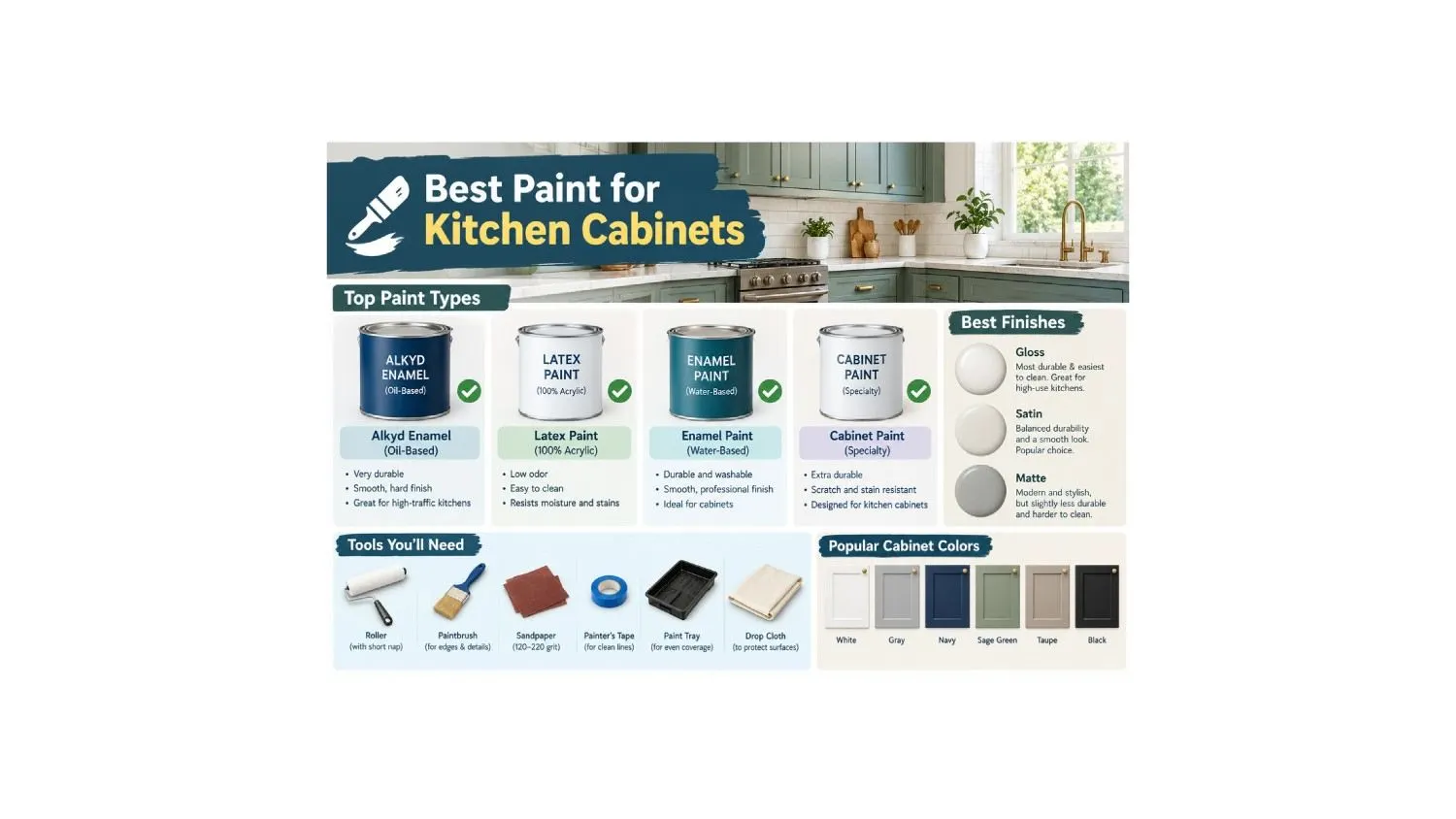
Popular cabinet colors include warm whites, soft greiges, sage and olive greens, deep navy blues, and moody charcoals. A two-tone look, such as navy or green lower cabinets with white uppers or a colored island, remains a favorite for people who want color without committing the whole kitchen.
Frequently Asked Questions
What is the best paint for kitchen cabinets?
For most DIYers, a urethane-modified waterborne alkyd enamel in satin or semi-gloss is the best choice. It levels smoothly, dries hard, and cleans up with water. Pros often use 2K waterborne polyurethane for the toughest finish.
What do professional painters use to paint kitchen cabinets?
Most pros use urethane-modified alkyd enamels, waterborne alkyds, or professional 1K and 2K waterborne cabinet coatings, applied over a shellac or bonding primer. Doors are usually sprayed for a smooth finish.
Can I just paint over my kitchen cabinets without sanding?
You can, but it’s riskier. Degrease well, use a liquid deglosser, and prime with a bonding primer. A quick scuff with a fine sanding sponge greatly improves adhesion and durability.
Is it better to brush or roll paint on cabinets?
Use both. Brush detailed edges and recessed panels, then roll flat areas with a dense foam or fine microfiber roller. Spraying gives the smoothest, factory-like finish.
What are common mistakes when painting kitchen cabinets?
The biggest mistakes are using wall paint, skipping degreasing and primer, applying thick coats, recoating too soon, and rehanging doors before the paint is dry.
What are the best paints for kitchen cabinets on a budget?
Urethane acrylic cabinet enamels give the best value. They dry fast, stick well over primer, and cost less than hybrid alkyds. Avoid regular wall paint, even if it’s cheaper.
Should cabinets be satin or semi-gloss?
Satin is the most popular for its soft look and good cleanability. Semi-gloss is easier to wipe clean and works well in busy kitchens, but it shows more flaws.
Is oil-based or water-based paint better for cabinets?
For most homes, water-based hybrid enamels are better. They give a hard, smooth finish like oil but with low odor, faster drying, easy cleanup, and less yellowing.
How long does cabinet paint take to cure?
Most cabinet paints feel dry in hours but take about 2 to 4 weeks to fully cure. Treat cabinets gently during this time.
What is the best cabinet paint for kitchen cabinets without sanding?
An all-in-one bonding paint or a cabinet refinishing kit is easiest. For better durability, degrease, use a liquid deglosser and a bonding primer, then a cabinet enamel.
Final Thoughts
The best paint for kitchen cabinets is one made for cabinets, not walls. For most DIYers, a urethane-modified waterborne alkyd enamel in satin or semi-gloss offers the best mix of smooth looks, hardness, and easy cleanup. Choose a urethane acrylic enamel for speed and value, a waterborne alkyd for the smoothest brushed finish, or hire a pro for a 2K polyurethane finish that can last decades.
Remember, as experienced painters say, prep matters more than the paint. Degrease, scuff-sand, prime with a shellac or bonding primer, apply thin coats, and give the paint time to cure. Do that, and your cabinets will look beautiful and hold up to daily kitchen life for years.