Why Is My Water Heater Making Noise? 9 Sounds and How to Fix Them
A water heater should work quietly in the background. So when it starts popping, banging, or hissing, it’s hard to ignore. Some of these sounds are normal and harmless. Others are early warnings that something needs fixing soon. If you’ve been asking yourself, “Why is my water heater making noise?”, you’re in the right place.
In this guide, we’ll explain what each water heater sound means in plain, simple words. You’ll learn which noises are normal and which ones mean you should call a plumber. We’ll also show you how to flush a water heater step by step, since that fixes the most common noise. Then we’ll cover repair costs for 2026 and the warning signs that your tank may be close to failing. By the end, you’ll know exactly what that sound is and what to do about it.
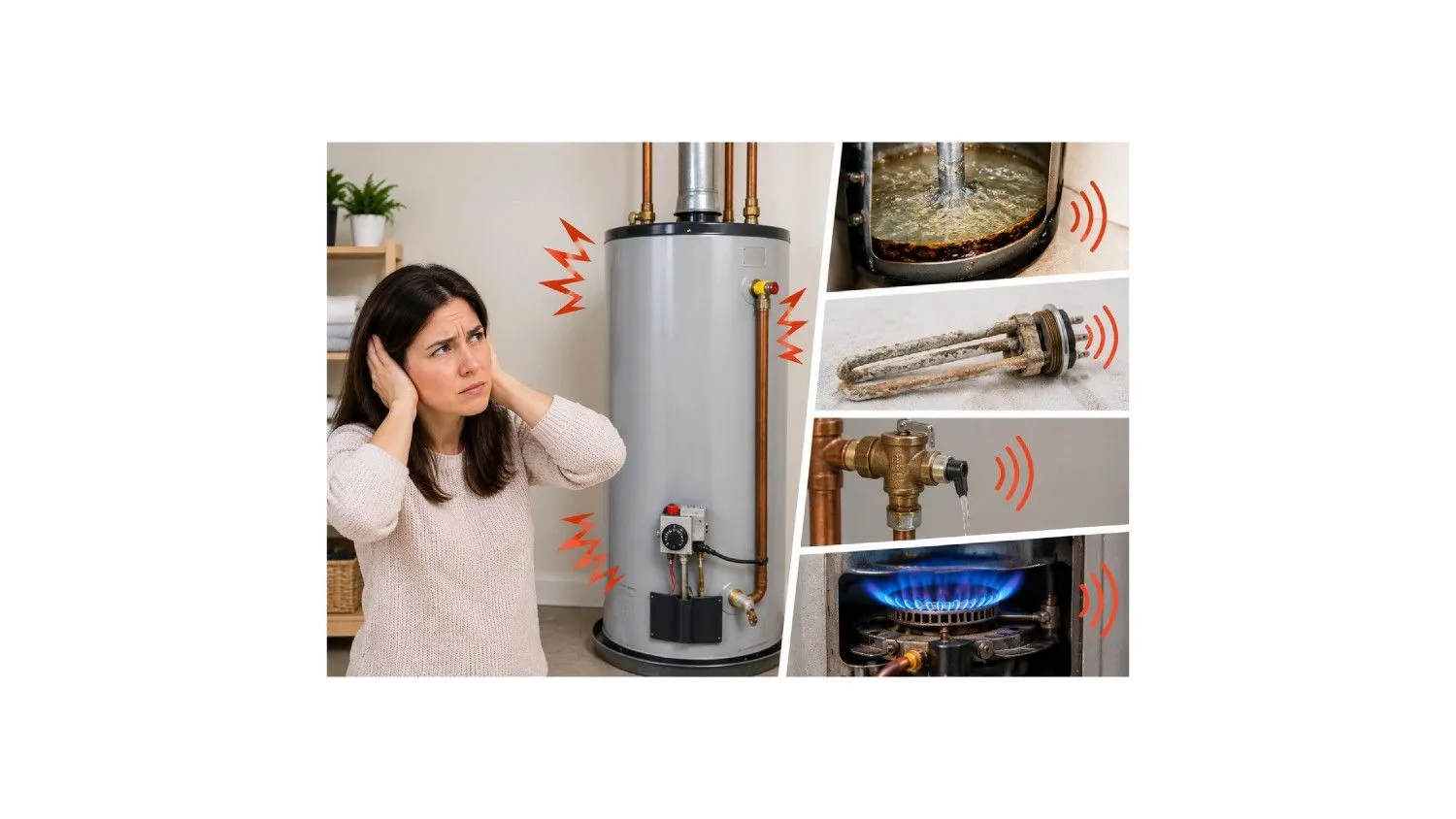
Quick answer: Most water heater noise comes from sediment (mineral buildup at the bottom of the tank), which causes popping and rumbling. Flushing the tank usually fixes it. Banging often comes from water hammer or high water pressure in your pipes. Hissing or sizzling can mean a leak or, on a gas unit, a possible gas leak, so turn the unit off and call a pro. Light ticking and humming are usually normal.
Why Is My Water Heater Making Noise? The 3 Main Causes
So, why is my water heater making noise? Almost every sound traces back to one of three things:
- Sediment buildup. Tap water has minerals like calcium and magnesium in it. Over time, they settle at the bottom of the tank and form a crusty layer. Water gets trapped under that layer, turns to steam, and pops as it escapes. Hard water makes this happen faster.
- Heat expansion. Metal tanks and pipes grow a tiny bit when they heat up and shrink when they cool down. That movement causes ticking and tapping.
- Water pressure and flow problems. High water pressure, a valve that’s partly closed, or water that stops suddenly can cause banging, whistling, or screeching.
If you’ve ruled these out and still wonder why is my water heater making noise, the cause may be a worn-out part, like a loose heating element, a broken dip tube, or a leaking valve.
Water Heater Noises Chart: What Each Sound Means
Use this quick chart to answer “why is my water heater making noise?” by matching the sound to its likely cause. Then read the section below for each sound.
| Sound | Most likely cause | How serious? | What to do |
|---|---|---|---|
| Popping or rumbling | Sediment at the bottom of the tank | Medium | Flush the tank |
| Banging or knocking | Water hammer or high water pressure | Medium to high | Check pressure; add a water hammer arrestor |
| Hissing or sizzling | Water dripping on a hot part, or a gas leak | High | Turn it off and call a pro |
| Screeching or whistling | Partly closed valve or blocked flow | Medium | Open valves fully; check the T&P valve |
| Crackling | Condensation dripping on a gas burner | Usually low | Normal unless it’s frequent |
| Ticking or tapping | Pipes expanding, loose straps, heat traps | Low | Usually normal; tighten pipe straps |
| Humming or buzzing | Loose electric heating element | Low | Tighten the element |
| Gurgling | Water moving, or a broken dip tube | Low to medium | Normal after heavy use; call a pro if constant |
| Thumping or clunking | Large chunks of sediment moving | Medium | Flush; replace if very old |
1. Water Heater Popping Noise
A water heater popping noise is the most common sound people hear. It often sounds like popcorn or a kettle about to boil. If popping is your answer to “why is my water heater making noise?”, sediment is almost always the reason.
Why it happens: Minerals settle at the bottom of the tank and form a layer of sediment. When the burner or heating element turns on, water trapped under that layer heats up fast, turns into steam bubbles, and pops as it pushes through.
Why it matters: The sediment acts like a blanket between the heat and the water. Your water heater has to work harder, which wastes energy and raises your bills. Over time, the extra heat can wear out the bottom of the tank and shorten its life.
How to fix it: Flush the tank to wash out the sediment (see our step-by-step guide below). If the popping is new, one flush often fixes it. If the tank is old and the popping is very loud, the sediment may be too hard to remove.
2. Rumbling Noise
Why it happens: Rumbling is the same problem as popping, just worse. A thick layer of sediment makes the water boil and churn under it, which creates a low, deep rumble.
How to fix it: Flush the tank. If the rumbling doesn’t go away, have a plumber do a deeper cleaning. On a tank that’s 10 years old or more, heavy rumbling is often a sign it’s time for a new water heater.
3. Banging or Knocking
Why it happens: Loud bangs usually come from water hammer. This happens when flowing water stops suddenly, like when a washing machine or dishwasher shuts off a valve fast. The water slams into the closed valve and shakes the pipes. High water pressure and loose pipes make it worse. In some cases, big chunks of sediment can also knock around inside the tank.
How to fix it:
- Check your water pressure. Buy a simple pressure gauge that screws onto an outdoor faucet. Most homes should be between 40 and 80 psi. If it’s over 80 psi, a plumber can install or adjust a pressure-reducing valve.
- Install a water hammer arrestor. This small device absorbs the shock when water stops suddenly.
- Secure loose pipes. Add pipe straps or foam insulation so pipes don’t hit walls or each other.
- Check the expansion tank. If your home has one, a failed expansion tank can cause pressure spikes.
If banging is why your water heater is making noise, don’t ignore it. Regular banging puts stress on pipes and fittings and can lead to leaks.
4. Hissing or Sizzling
Hissing and sizzling are the sounds you should take most seriously. If this is why your water heater is making noise, act quickly.
Why it happens:
- Electric water heaters: Water may be leaking onto a hot heating element, often from a worn gasket. A hissing element can also mean it’s wearing out.
- Gas water heaters: Water may be dripping onto the hot burner. Hissing near the gas valve or burner can also be a gas leak.
- Any water heater: The temperature and pressure (T&P) relief valve may be letting off water or steam because the pressure or temperature is too high.
What to do: Look for water around the tank, the valves, and the pipes on top. If you see a leak, turn off power or gas to the unit and call a plumber.
Gas safety warning: If you smell rotten eggs or hear hissing near the gas line, don’t touch any light switches or electrical devices. Leave your home right away and call your gas company or 911 from outside.
5. Screeching, Whistling, or a “Tea Kettle” Sound
Why it happens: A high-pitched screech or whistle usually means water is being squeezed through a tight space. Common causes include a shutoff valve that’s only partly open, mineral buildup in a valve or pipe, or a T&P valve that’s starting to fail. A “tea kettle” sound can also come from heavy sediment that makes water boil at the bottom of the tank.
How to fix it: Make sure the cold-water inlet valve and the hot-water outlet valve on top of the heater are fully open. If the sound continues, have a plumber check the T&P valve and pressure. Old gate valves can be replaced with full-port ball valves, which let water flow more freely. If the whistle comes with heavy popping, flush the tank.
6. Crackling
Why it happens: On gas water heaters, small drops of condensation can fall onto the hot burner and sizzle or crackle. This is common when the tank fills with cold water, like after a long shower.
Is it normal? Usually, yes. If the crackling is very loud, happens all the time, or you see water pooling, have a plumber check for a leak.
7. Ticking or Tapping
Why it happens: Pipes and the tank expand and shrink as they heat up and cool down. Loose pipe straps let pipes tap against the wall. Many water heaters also have small “heat traps” on the pipes that tick as water moves.
How to fix it: This is usually normal. If it bothers you, tighten the pipe straps. A plumber can also swap noisy heat traps for quieter fittings.
8. Humming or Buzzing
Why it happens: On electric water heaters, a low hum is normal while the heating element is running. A louder buzz can mean the element is loose and vibrating as water moves past it.
How to fix it: Turn off power at the breaker, then tighten the element with an element wrench. If the buzzing continues, the element may be failing and need replacing. A loud electrical buzz from the control panel or wiring should be checked by a pro.
9. Gurgling
Why it happens: Light gurgling after heavy hot water use is normal. It’s just water moving and settling. But constant gurgling, along with lukewarm water, can mean the dip tube is broken. The dip tube sends cold water to the bottom of the tank. When it breaks, cold and hot water mix at the top.
How to fix it: If you’re running out of hot water fast, have a plumber check and replace the dip tube.
Other Water Heater Noises Homeowners Ask About
If your answer to “why is my water heater making noise?” isn’t in the list above, it may be one of these. Plumbers and repair techs hear about them again and again.
A Loud Rushing Water Sound, and Water Pouring From a Pipe Outside
If you hear water rushing and see water gushing from a pipe on an outside wall or near the heater, follow that pipe back to the tank. It usually leads to the temperature and pressure (T&P) relief valve. The valve is either doing its job because the tank is overheated or over-pressurized, or, more often, the valve itself has failed and won’t close. Turn off the water heater’s power or gas and the cold water supply to stop the flow, then call a plumber. Replacing a failed relief valve usually fixes it. Never plug or cap the discharge pipe, because the valve is a key safety device.
A Boiling or “Electric Kettle” Sound From an Electric Heater
A soft boiling or simmering sound while an electric heater is running can be normal. The elements get hot enough to briefly boil the water touching them, and the noise stops when heating stops. This can happen even with brand-new elements. If the sound gets loud, the elements may be coated in mineral scale. Flushing the tank, or replacing scaled elements, usually quiets it down.
Popping or Clicking When You Turn On a Hot Water Tap
On tankless and some newer gas water heaters, a click or small pop when you open a hot tap is often just the igniter lighting the burner. That’s normal. If it starts getting louder, takes several tries to light, or makes a harsh bang, the igniter may be wearing out and should be checked.
Rumbling Caused by Steam (Water Too Hot)
Not all rumbling comes from sediment. If the water is getting close to boiling, steam bubbles form and rumble inside the tank. Try lowering the thermostat. If the noise stops, the temperature was set too high. If you turn the thermostat all the way down and the burner or elements still don’t shut off, the thermostat may be faulty. Turn off the heater and have a plumber replace it, because a stuck thermostat can make the tank dangerously hot.
Gurgling or Knocking After the Water Was Shut Off
If you recently had plumbing work done or drained the tank, air may be trapped in the pipes. As hot water moves, the air bubbles gurgle, spit, and knock. Open your hot water taps one at a time and let them run until the water flows smoothly. The noise should stop once the air is out.
Why Is My Water Heater Making Noise When It’s Not in Use?
Many people wonder, “Why is my water heater making noise when no one is using water, or at night?” Here’s the answer: your water heater turns on by itself to keep the tank hot, even when no taps are running. Each time it heats, sediment can pop, and metal can tick as it warms and cools. At night, your home is quieter, so you notice these sounds more.
Noise when the water is off can also come from thermal expansion. As water heats, it expands and raises pressure in the pipes. If you have high pressure or no expansion tank, you may hear knocking or the T&P valve may hiss. A plumber can check your pressure and add an expansion tank if needed.
Why Is My Water Heater Making Noise After a Shower?
After a long shower, cold water rushes into the tank to replace the hot water you used. The burner or elements turn on at full power to heat it. That’s when sediment pops the most, and on gas units, condensation can sizzle on the burner. A few minutes of popping or crackling after heavy use is common. Loud, long-lasting noise means it’s time to flush the tank.
Electric vs. Gas vs. Tankless: Different Noises
| Type | Normal sounds | Sounds to watch |
|---|---|---|
| Electric tank | Soft humming while heating; light ticking | Loud buzzing, hissing at an element, popping from sediment |
| Gas tank | Soft “whoosh” when the burner lights; light crackling | Hissing near the gas valve, loud popping, rumbling |
| Tankless | Fan noise; clicking as it fires up | Whistling, banging, or rattling, often from mineral scale. Most need descaling about once a year in hard water |
| Heat pump | Fan and compressor hum, like a small fridge | Grinding, rattling, or a very loud fan |
How to Flush a Water Heater (Step by Step)
Since sediment causes most noise, knowing how to flush a water heater is the best fix you can learn. For most people asking “why is my water heater making noise?”, a flush is the answer. Major manufacturers and most plumbers suggest flushing a tank water heater once a year, or more often if you have hard water.
What You’ll Need
- A garden hose
- A flathead screwdriver or wrench (for some drain valves)
- A bucket
- Gloves
Steps
- Turn off the heat. For an electric heater, switch off the breaker. For a gas heater, turn the gas control knob to “Pilot” or “Off.” Never run an electric heater with an empty tank, because it will burn out the elements.
- Let the water cool. Wait a few hours, or overnight, so you don’t get burned. The water inside can be very hot.
- Turn off the cold water supply using the valve on the pipe going into the top of the tank.
- Attach a garden hose to the drain valve near the bottom of the tank. Run the other end to a floor drain, outside, or into a bucket.
- Open a hot water tap somewhere in the house, like a nearby sink. This lets air in so the tank drains faster.
- Open the drain valve and let the tank drain. The water may look cloudy or have bits of sediment in it.
- Stir up the sediment. Once the tank is mostly empty, turn the cold water supply on for a few seconds, then off again. This rinses loose sediment out. Repeat until the water from the hose runs clear.
- Close the drain valve and remove the hose.
- Refill the tank. Turn the cold water supply back on. Leave the hot water tap open until water flows steadily with no sputtering. That means the air is out.
- Turn the heat back on. Flip the breaker back on, or relight the pilot and set the gas knob back to your temperature setting.
Tips: If the drain valve is clogged, sediment may be blocking it. Don’t force it. A plumber can clear it or replace the valve. Old plastic drain valves can break or leak after being opened, so have a replacement on hand if your tank is older.
Too late to flush? If your tank is 10 years or older and has never been flushed, the sediment may be rock-hard. Flushing may not help much, and opening the drain valve could cause a leak. Talk to a plumber first.
Water Heater Repair Costs in 2026
Here’s what common fixes cost, based on 2026 national cost data. The national average water heater repair costs about $616, with most homeowners paying between $228 and $1,017.
| Repair | Typical cost with a pro | Fixes which noise? |
|---|---|---|
| Tank flush | $110 to $200 | Popping, rumbling, thumping |
| Electric heating element | $200 to $300 | Humming, buzzing, hissing |
| T&P relief valve | Up to $200 | Hissing, whistling |
| Dip tube | About $150 | Gurgling, lukewarm water |
| Expansion tank | $100 to $400 | Knocking, pressure problems |
| Gas valve | About $350 | Hissing near the gas control |
| Full water heater replacement | About $850 to $1,800 | Old tank with heavy sediment or leaks |
Is a Noisy Water Heater Dangerous?
Most of the time, no. Popping, ticking, and humming are annoying but not dangerous. But some sounds do need fast action:
- Hissing near a gas line, or a gas smell: Leave the house and call the gas company.
- Hissing or sizzling with water on the floor: Turn off power or gas and water to the unit, and call a plumber.
- A T&P valve that keeps releasing water or steam: The tank may be overheating or over-pressurized. Turn it off and get it checked.
- Loud, constant banging: It can damage pipes and fittings over time.
How Do You Know If Your Water Heater Is About to Burst?
Water heaters rarely “explode,” but tanks can crack and leak, sometimes a lot. Watch for these warning signs:
- Water pooling around the base of the tank
- Rust on the tank or rusty, brown hot water
- Loud rumbling or popping that doesn’t stop after flushing
- A T&P valve that drips or opens often
- The tank is more than 10 to 12 years old
- Bulging, dents, or corrosion on the outside of the tank
If you see these signs, call a plumber soon. A new water heater costs much less than repairing major water damage.
When to Call a Plumber
If you still can’t figure out why is my water heater making noise, or the fix feels risky, call a plumber when:
- The noise continues after you flush the tank.
- You hear hissing, sizzling, or loud screeching.
- You see leaks, rust, or discolored water.
- You’re running out of hot water faster than usual.
- Your water heater is around 8 to 12 years old and new noises are starting.
- You’re not comfortable working with gas, electricity, or very hot water.
How to Keep Your Water Heater Quiet
The best way to never ask “why is my water heater making noise?” again is simple maintenance:
- Flush the tank once a year, or every few months with hard water.
- Set the temperature to about 120°F. Higher temperatures build up minerals faster and raise pressure.
- Check the anode rod every few years. This rod protects the tank from rust. Replace it when it’s worn down.
- Test the T&P valve once a year by lifting the lever briefly (water will come out, so put a bucket under the pipe).
- Consider a water softener if you have very hard water.
- Keep your water pressure under 80 psi, and add an expansion tank if a plumber recommends one.
Frequently Asked Questions
Why is my water heater making noise?
Most often, it’s sediment at the bottom of the tank, which causes popping and rumbling. Other common causes are water hammer or high water pressure (banging), a partly closed valve (whistling), a loose heating element (humming), or a leak dripping on a hot part (hissing).
Should my water heater be completely silent?
No. Light ticking, soft humming on electric models, a quiet “whoosh” when a gas burner lights, and some gurgling after heavy use are all normal. Loud, new, or constant noises are the ones to look into.
Why does my water heater sound like a tea kettle?
A tea kettle or whistling sound usually means water is being squeezed through a tight spot, like a partly closed valve or a failing T&P valve. Heavy sediment that makes water boil at the bottom of the tank can also sound like a kettle.
What does a water heater normally sound like?
A healthy water heater makes soft, brief sounds: light ticking as it heats and cools, a gentle hum on electric units, and a quiet ignition sound on gas units. It shouldn’t bang, screech, or hiss.
How often should you flush a water heater?
Most manufacturers and plumbers recommend flushing a tank water heater once a year. If you have hard water, flushing every few months can help prevent noise and buildup.
Can I fix a water heater popping noise myself?
Often, yes. Flushing the tank removes the sediment that causes popping. If the tank is old and has never been flushed, call a plumber first, because the drain valve may clog or leak.
How long do water heaters last?
Most tank water heaters last about 8 to 12 years. Tankless water heaters often last 20 years or more with regular descaling.
Why is water gushing from the pipe next to my water heater?
That pipe is usually connected to the temperature and pressure relief valve. Water pouring out means the tank is overheated or over-pressurized, or the valve has failed. Turn off the heater and the cold water supply, then call a plumber.
Why does my new electric water heater sound like a kettle?
The heating elements briefly boil the water touching them while they heat, which makes a simmering sound. It’s usually normal and stops when heating stops. If it’s loud, scale on the elements may be the cause.
Final Thoughts
If you’ve been wondering, “Why is my water heater making noise?”, the answer is usually simple: sediment. A yearly flush can stop most popping and rumbling and help your water heater last longer. Banging often points to water pressure or loose pipes, while ticking and humming are usually just normal operating sounds.
Take hissing, sizzling, leaks, or any gas smell seriously, and call a pro right away. And if your tank is over 10 years old and getting louder, it may be time to start planning for a new one. Listening to your water heater now can save you from a cold shower, and a costly flood, later.