Engineered Hardwood vs Solid Hardwood: Which Is Better for Your Home? (Complete Guide)
Hardwood floors add warmth, beauty, and value to any home. But once you start shopping, you’ll quickly face a big choice: engineered hardwood or solid hardwood. Both are made from real wood, and once they’re installed, most people can’t tell them apart. Yet they’re built very differently, and that changes where you can put them, how long they last, and what you’ll pay. Picking the wrong one for your room can lead to gaps, cupping, or a floor that wears out sooner than you expected.
In this guide, we compare engineered hardwood vs solid hardwood in plain, simple words. You’ll learn how each one is made, what a wear layer is, and how many times each floor can be sanded. We’ll compare cost, durability, moisture resistance, installation, resale value, and how each one handles pets, kitchens, basements, and concrete slabs. You’ll also get a simple room-by-room guide and clear answers to the most common questions. By the end, you’ll know exactly which type of hardwood floor fits your home, your budget, and your lifestyle.
Quick answer: Choose solid hardwood if you want a floor that can last 50 to 100+ years, be sanded and refinished many times, and you’re installing it above ground over a wood subfloor in a home with steady humidity. Choose engineered hardwood if you need flooring for a basement, a concrete slab, radiant heat, a humid climate, or wide planks, or if you want a lower upfront cost and an easier, often DIY-friendly install. A quality engineered floor with a thick wear layer (3 mm or more) can perform almost like solid wood for decades.
Engineered Hardwood vs Solid Hardwood: Quick Comparison
| Feature | Solid hardwood | Engineered hardwood |
|---|---|---|
| What it is | One solid piece of wood | Real wood top layer over a plywood, HDF, or wood core |
| Typical thickness | ¾ inch (some ⁵⁄₁₆ inch) | ⅜ to ¾ inch total; wear layer about 0.6 to 6 mm |
| Times it can be refinished | Often 4 to 6+ times | 0 to 5 times, depending on wear layer |
| Lifespan | 50 to 100+ years | About 20 to 40 years; longer with thick wear layers |
| Moisture and humidity | Reacts more; can cup, gap, or warp | More stable; better in changing humidity |
| Waterproof? | No | No |
| Basements (below grade) | Not recommended | Yes |
| Over concrete | Only with a wood subfloor over the slab | Yes, glue-down or floating |
| Radiant floor heat | Usually not recommended | Often approved |
| Installation | Nail or staple down | Float, glue, nail, or staple |
| DIY-friendly? | Harder; pro install recommended | Easier, especially click-lock floating floors |
| Installed cost | About $10 to $25+ per sq ft | About $6 to $16 per sq ft |
| Wide planks | Prone to cupping over about 5 inches | Great for wide planks (7 inches and up) |
What Is Solid Hardwood Flooring?
To understand engineered hardwood vs solid hardwood, start with how each is made. Solid hardwood is exactly what it sounds like: each board is cut from one solid piece of wood, top to bottom. Most solid boards are ¾ inch thick, with tongue-and-groove edges that lock together. Common widths are about 2¼ to 5 inches, though wider boards are available.
Solid hardwood can be bought unfinished (sanded, stained, and sealed after it’s installed in your home) or prefinished at the factory. Popular species include red oak, white oak, hickory, maple, walnut, and cherry.
Solid hardwood pros:
- Can be sanded and refinished many times over its life
- Lasts for generations; many 100-year-old homes still have their original floors
- Feels solid and quiet underfoot
- Can be site-finished for a custom stain color and smooth, sealed surface
- Strong appeal to home buyers
Solid hardwood cons:
- Expands and shrinks with humidity, which can cause gaps, cupping, or crowning
- Not recommended for basements or directly over concrete
- Usually costs more to buy and install
- Installation is slower and best left to a pro
- Wide planks are more likely to cup
What Is Engineered Hardwood Flooring?
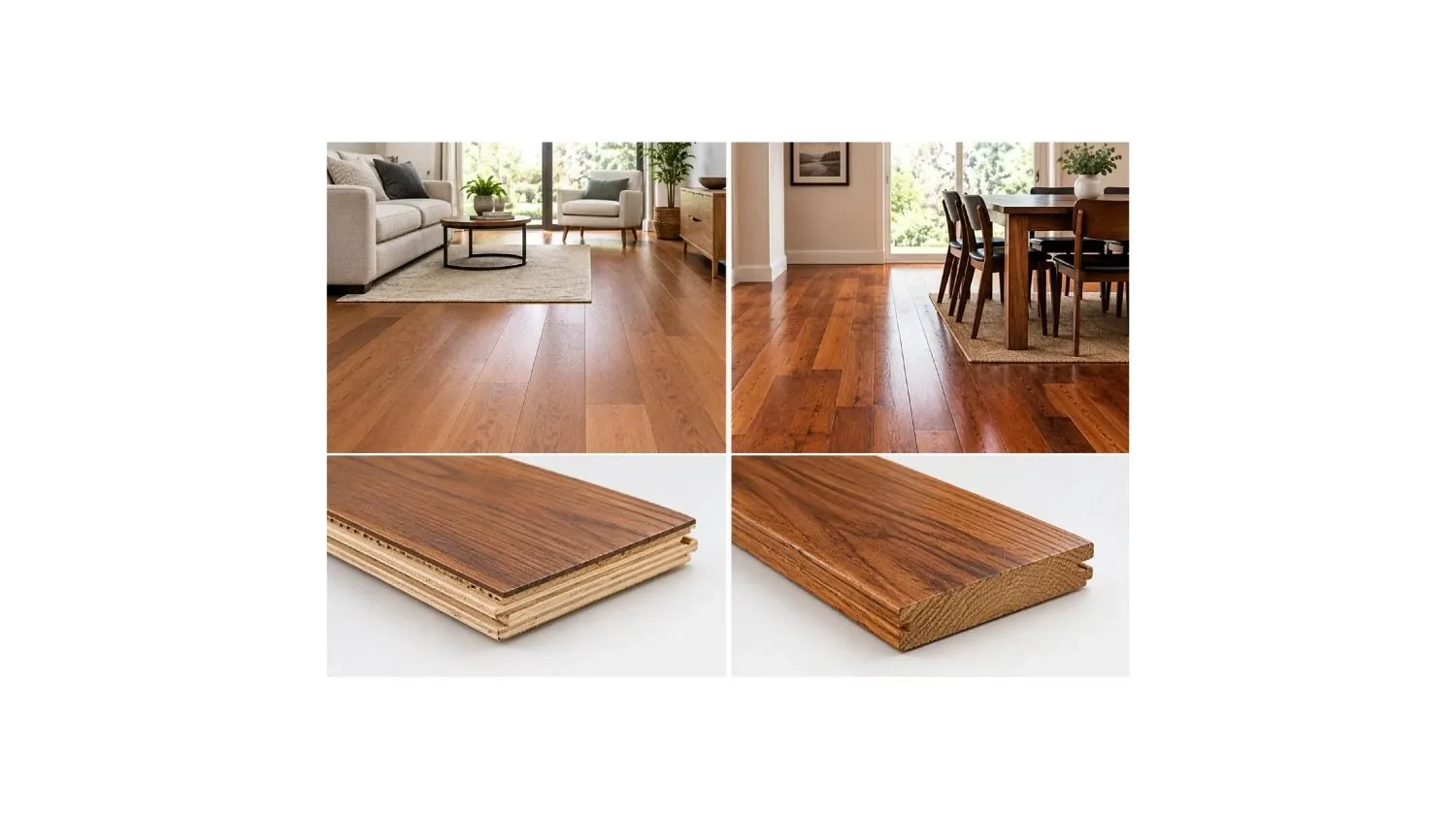
Engineered hardwood has a top layer of real hardwood, called the wear layer or veneer, glued on top of a core made of several layers of plywood, high-density fiberboard (HDF), or softwood. The core layers are stacked with their grain running in different directions. This cross-layered build fights the natural swelling and shrinking of wood, so engineered floors stay more stable when humidity changes.
In the engineered hardwood vs solid hardwood debate, looks are almost a tie. Once installed, engineered hardwood looks just like solid hardwood, because the surface you see and walk on is real wood. Most engineered floors come prefinished from the factory with tough, multi-coat finishes.
Engineered hardwood pros:
- More stable in humid climates and changing seasons
- Can be installed below grade, over concrete, and often over radiant heat
- Lower upfront cost in most cases
- Several install options, including DIY-friendly click-lock floating floors
- Great choice for wide, long planks
- Uses less slow-growing hardwood per square foot
Engineered hardwood cons:
- Can be refinished fewer times, and thin wear layers can’t be sanded at all
- Shorter lifespan than solid wood, especially budget products
- Quality varies a lot between products
- Floating floors can sound a bit hollow without a good underlayment
- Still not waterproof
Is Engineered Hardwood “Real” Wood, or Just Plywood or Laminate?
This is a common mix-up. Some people online call engineered hardwood “just fancy plywood” or lump it in with laminate. That’s not accurate. Engineered hardwood has a genuine hardwood surface, so it looks, feels, and ages like real wood. Laminate is different: it’s a fiberboard core with a printed photo of wood under a clear plastic layer. Laminate contains no real hardwood on top and can’t be sanded or refinished. Cheap engineered floors with very thin veneers can look less natural, but a quality engineered floor is real hardwood flooring.
The Wear Layer: The Most Important Number in Engineered Hardwood
When you compare engineered hardwood vs solid hardwood, the wear layer is the key to how long engineered flooring lasts and whether you can refinish it. Here’s a simple guide:
| Wear layer thickness | Can it be sanded? | Typical lifespan |
|---|---|---|
| Under 1 mm (often 0.6 mm) | No; can only be screened and recoated | About 10 to 20 years |
| About 2 mm | Usually once, lightly | About 20 to 30 years |
| About 3 mm | 1 to 2 times | About 30 to 50 years |
| 4 to 6 mm | About 3 to 5 times | 50+ years |
For comparison, solid hardwood has about ¼ inch (around 6 mm) of usable wood above the tongue and groove. Each full sanding removes roughly 1/32 inch, which is why solid floors can often be refinished 4 to 6 times or more.
How the veneer is cut matters too. “Sawn-cut” veneers are cut like regular lumber and look the most like solid wood. “Sliced” veneers also look natural. “Rotary-peeled” veneers are peeled off the log like a paper towel roll, which can create an unusual, wavy grain pattern, and they’re usually found on cheaper floors.
Core Types
- Multi-ply plywood core: Strong and stable; 7 to 9 plies are better than 3 to 5.
- HDF (high-density fiberboard) core: Hard and dent-resistant, often used in click-lock floors. It handles standing water poorly.
- Three-layer wood core: A softwood center layer with a wood backing. It feels closer to solid wood and is common in European-style wide planks.
Engineered Hardwood vs Solid Hardwood: Head-to-Head Breakdown
1. Durability and Scratch Resistance
Here’s what surprises many shoppers: neither type is automatically “harder.” Surface durability mostly depends on two things: the wood species and the finish. A hickory engineered floor will resist dents better than a walnut solid floor.
| Species | Approximate Janka hardness |
|---|---|
| Walnut (American black) | About 1,010 |
| Red oak | About 1,290 |
| White oak | About 1,360 |
| Hard maple | About 1,450 |
| Hickory | About 1,820 |
The higher the Janka number, the more the wood resists dents. Factory finishes on prefinished floors (common on engineered hardwood) are often tougher than finishes applied on site, though they can be harder to touch up later.
As one former contractor put it, the surface hardness of engineered floors varies a lot by product, so check the maker’s technical specs for the species, finish, and wear layer before you buy.
2. Moisture and Humidity
Moisture is the biggest difference in engineered hardwood vs solid hardwood, and this is where engineered wins clearly. All wood takes in and gives off moisture, swelling in humid summers and shrinking in dry winters. A solid board moves more, which can cause:
- Gaps between boards in dry winter months
- Cupping, where board edges rise higher than the center, often from moisture below
- Crowning, where the center rises above the edges
Engineered hardwood’s cross-layered core keeps movement much smaller. That makes it the better choice in humid climates like Florida and the Gulf Coast, near the ocean, in basements, and in homes with big seasonal swings.
Important: Neither floor is waterproof. Standing water, leaks, and floods can ruin both. Wipe spills quickly, and skip both types in full bathrooms and laundry rooms. For those rooms, consider tile or waterproof vinyl plank instead.
Humidity tip: Keep indoor humidity at about 35% to 55% year-round with a humidifier in winter and air conditioning or a dehumidifier in summer. This protects any wood floor.
3. Refinishing and Lifespan
For lifespan, engineered hardwood vs solid hardwood comes down to how much wood you can sand. Solid hardwood is the long-term champion. A ¾-inch solid floor can be sanded and refinished many times, so you can change the stain color, remove deep scratches, and make it look brand new every 10 to 15 years or so. That’s how solid floors last 50 to 100+ years.
One fair point, though: solid wood can be refinished more times, but many homeowners never refinish more than once or twice anyway, so the extra refinishing life matters most if you plan to stay in your home for decades.
Engineered floors depend on their wear layer. A budget floor with a thin veneer may need to be replaced after 15 to 25 years. A premium engineered floor with a 4 to 6 mm wear layer can be refinished several times and last 50 years or more. Both types can be “screened and recoated,” a light buff and fresh coat of finish that removes surface scuffs without sanding into the wood.
4. Cost
| Cost per square foot | Solid hardwood | Engineered hardwood |
|---|---|---|
| Materials | About $5 to $15+ (rare and exotic species up to about $25+) | About $3 to $10+ (premium wide planks up to about $16) |
| Installation labor | About $5 to $10 | About $3 to $6 |
| Total installed | About $10 to $25+ | About $6 to $16+ |
| Site finishing (unfinished solid) | Add about $3 to $5 | Usually not needed (prefinished) |
| Sand and refinish later | About $3 to $8 | About $3 to $8 (if wear layer allows) |
Rough national ranges. Prices vary by species, plank width, region, and installer, so get local quotes.
Price is often the deciding factor in engineered hardwood vs solid hardwood. For example, for a 500-square-foot living area, engineered hardwood might cost about $3,000 to $8,000 installed, while solid hardwood might run about $5,000 to $12,500 or more. Premium engineered floors with thick wear layers and wide planks can cost as much as solid wood, or more.
What does it cost for a whole house?
| Area | Engineered (installed) | Solid (installed) |
|---|---|---|
| 500 sq ft | About $3,000 to $8,000 | About $5,000 to $12,500+ |
| 1,000 sq ft | About $6,000 to $16,000 | About $10,000 to $25,000+ |
| 2,000 sq ft | About $12,000 to $32,000 | About $20,000 to $50,000+ |
Add 5% to 10% extra material for cuts and waste, plus costs for removing old flooring, subfloor repairs, stairs, and trim.
Is solid hardwood ever cheaper? Yes. Prices overlap a lot. Basic unfinished solid oak in narrow widths can cost less per square foot than premium engineered planks with thick wear layers and wide boards. Many homeowners report finding solid hardwood priced lower than the engineered floor they were considering. Always compare the exact products, not just the category, and remember that unfinished solid wood adds the cost of sanding and finishing on site.
Think long term, too. Solid wood costs more up front but may never need replacing. A cheap engineered floor costs less now but may need to be replaced sooner. As one homeowner put it, engineered is less costly to replace, but solid wood, with care, will last a lot longer.
5. Installation
| Method | Solid | Engineered |
|---|---|---|
| Nail-down or staple-down over wood subfloor | Yes (standard) | Yes |
| Glue-down to concrete | Not for standard ¾-inch boards | Yes |
| Floating (click-lock or glued edges over underlayment) | No | Yes |
| Below grade (basement) | No | Yes |
| Over radiant heat | Usually no | Often yes; check maker’s limits |
Installation is where engineered hardwood vs solid hardwood differ the most in practice. Both types need time to adjust to your home before installation, called acclimation. Installers check the moisture content of the wood and the subfloor with a moisture meter and make sure they are close, usually within a few percentage points, before laying the floor. Skipping this step is a top cause of gaps and cupping.
Floating engineered floors are the most DIY-friendly. Solid hardwood needs a flooring nailer, careful layout, and often sanding and finishing on site, so most homeowners hire a pro.
6. Look and Feel
Once installed, both are real wood, so they look very similar. A few differences:
- Plank width: Engineered is the go-to for wide planks (7 to 10+ inches) because wide solid boards move and cup more.
- Edges: Prefinished floors (most engineered and some solid) usually have small beveled edges. Site-finished solid floors are sanded flat, for a smooth, seamless look.
- Sound and feel: Nailed-down solid wood feels solid and quiet. Floating engineered floors can sound hollow unless you use a quality underlayment or glue them down.
- Character: Both come in hand-scraped, wire-brushed, and smooth finishes.
7. Resale Value
Home buyers love hardwood floors, and industry surveys have long found that more than half of buyers would pay more for a home with them. In most listings, quality engineered hardwood is marketed as “hardwood floors,” just like solid. Solid wood may carry a little extra appeal in high-end homes, while a thin, worn engineered floor won’t add much. A good floor of either type that’s in great condition is what buyers and appraisers notice most.
8. Environmental Impact
Engineered hardwood uses much less slow-growing hardwood per square foot, since only the top layer is premium wood. Solid hardwood uses more hardwood, but it can last a century, be reclaimed, and be reused. Either way, look for wood from certified, sustainably managed forests and low-emission (low-VOC) adhesives and finishes that meet U.S. formaldehyde emission standards.
Disadvantages of Engineered Hardwood
No guide to engineered hardwood vs solid hardwood is complete without the downsides. Engineered hardwood is a great floor, but it isn’t perfect. Before you buy, know the downsides:
- Limited refinishing: Thin wear layers can be sanded once or not at all.
- Shorter lifespan: Budget products may last only 20 to 25 years.
- Quality varies: Cheap products can have thin veneers, weak cores, and unnatural grain.
- Can sound hollow: Floating installs can sound louder and feel less solid. Solid wood generally has better sound and feel underfoot.
- Not waterproof: Standing water can still damage it, and HDF cores swell when soaked.
- Adhesives: The glues in the core can release small amounts of chemicals, so choose low-emission products.
- Deep dents and fading can’t always be sanded out the way they can on solid wood.
Hardwood vs. Engineered Hardwood vs. Laminate vs. Vinyl Plank
Many shoppers comparing engineered hardwood vs solid hardwood also look at laminate and vinyl plank. Here’s how they stack up:
| Feature | Solid hardwood | Engineered hardwood | Laminate | Vinyl plank (LVP) |
|---|---|---|---|---|
| Real wood surface? | Yes | Yes | No (photo layer) | No (printed vinyl) |
| Waterproof? | No | No | Some are water-resistant | Usually yes |
| Can be refinished? | Many times | 0 to 5 times | No | No |
| Scratch resistance | Depends on species and finish | Depends on species and finish | Very high | High |
| Lifespan | 50 to 100+ years | 20 to 40+ years | 15 to 25 years | 15 to 25 years |
| Installed cost (per sq ft) | About $10 to $25+ | About $6 to $16+ | About $3 to $8 | About $4 to $10 |
| Resale appeal | Highest | High | Medium | Medium |
If you want real wood, choose solid or engineered. If you need a waterproof floor for kitchens, bathrooms, or basements on a budget, vinyl plank is often the better fit.
What Is the Healthiest Flooring for Your Home?
Real wood floors are often considered among the healthiest choices because they don’t trap dust, pet hair, and allergens the way carpet does. To keep indoor air clean:
- Choose prefinished flooring, which is finished in the factory, so you avoid the fumes of applying finish inside your home.
- If you finish on site, use low-VOC, water-based finishes and ventilate well.
- For engineered floors, pick products that meet U.S. formaldehyde emission standards for composite wood and use low-emission adhesives.
- Solid wood has no core glue, so it’s a strong pick for people who are sensitive to chemicals.
Engineered Hardwood vs Solid Hardwood on Concrete Slabs
Many homes, especially in the South and West, are built on concrete slabs. Concrete holds moisture and can push it up into the floor above. That’s why the engineered hardwood vs solid hardwood choice is easiest here: engineered is usually the better option.
- Engineered hardwood can be glued directly to the slab or floated over a moisture-barrier underlayment, on, above, or below grade.
- Solid hardwood can’t be nailed into concrete. It needs a plywood subfloor installed over the slab with a vapor retarder (or wood sleepers), which adds height, time, and cost. It’s best only for above-grade slabs with consistently low moisture.
Always test the slab first. Skipping moisture testing is one of the most common reasons new wood floors cup, crown, or come loose. Installers use a calcium chloride test, which measures how much moisture the slab gives off, or a relative humidity probe placed inside the concrete. Every flooring maker sets its own limits, so follow the numbers in your product’s installation guide. If readings are high, you’ll need a moisture barrier or mitigation system. A new slab also needs time to dry, often several weeks to months, before wood goes down.
Which Is Better for Each Room?
Use this table to settle engineered hardwood vs solid hardwood for each space in your home.
| Room / situation | Better choice | Why |
|---|---|---|
| Living room, dining room, bedrooms (above grade) | Either; solid is classic | Stable rooms; solid gives longest life |
| Kitchen | Engineered (slight edge) | Handles moisture swings better; both need quick spill cleanup |
| Basement | Engineered | Solid isn’t recommended below grade |
| Concrete slab home | Engineered | Can glue or float directly over slab |
| Condo or apartment | Engineered | Often over concrete; check building rules for sound underlayment |
| Radiant floor heat | Engineered | More stable with heat; check maker approval |
| Humid or coastal climate | Engineered | Less swelling and cupping |
| Full bathroom or laundry room | Neither | Use tile or waterproof vinyl |
| “Forever home” you’ll stay in for decades | Solid (or thick-wear-layer engineered) | Can be refinished many times |
| Wide plank look | Engineered | Wide solid planks cup more easily |
Which Is Better With Pets and Kids?
Both scratch, because both have real wood on top. Here, engineered hardwood vs solid hardwood is close to a tie. Solid wood can be sanded more times to erase deep scratches, while engineered handles pet accidents and spills a bit better because it’s more stable. Your choices matter more than the floor type:
- Pick a harder species like hickory, white oak, or maple.
- Choose matte or satin finishes and wire-brushed or hand-scraped textures, which hide scratches.
- Pick lighter or mid-tone colors, which show dust and scratches less than dark floors.
- Keep pet nails trimmed and use rugs in high-traffic spots.
- If pet accidents are frequent, consider waterproof vinyl plank instead.
How to Care for Both Types
Care is the same whichever side of engineered hardwood vs solid hardwood you choose.
- Sweep or vacuum (with the beater bar off) often to remove grit that scratches.
- Use a barely damp microfiber mop and a cleaner made for wood floors.
- Never wet-mop or use a steam mop, and avoid vinegar, oil soaps, and wax on modern finishes.
- Wipe up spills right away.
- Put felt pads under furniture legs and mats at entry doors.
- Keep indoor humidity steady, around 35% to 55%.
- Screen and recoat every few years to refresh the finish before it wears through.
How to Choose a Quality Engineered Hardwood Floor
- Wear layer: Aim for at least 2 mm, and 3 mm or more if you want the option to refinish.
- Core: Choose multi-ply plywood (7+ plies) or a three-layer wood core for stability.
- Total thickness: About ½ inch or more feels more solid underfoot.
- Veneer cut: Sawn or sliced veneers look the most natural.
- Finish: A multi-coat factory finish adds scratch resistance.
- Warranty: Read the fine print. Long finish warranties often don’t cover scratches or water damage.
- Install approvals: Check that the product is approved for your subfloor, grade level, and radiant heat if needed.
Frequently Asked Questions
Which is better, engineered hardwood vs solid hardwood?
Neither is better everywhere. Solid hardwood is best for long life and repeated refinishing in stable, above-grade rooms. Engineered hardwood is best for basements, concrete slabs, radiant heat, humid climates, wide planks, and lower upfront cost.
Can you tell the difference between engineered and solid hardwood?
Usually not once it’s installed, because both have a real wood surface. You may notice beveled edges on prefinished engineered floors, or a slightly hollow sound with floating installs.
How long does engineered hardwood last compared to solid?
Solid hardwood can last 50 to 100+ years. Engineered hardwood usually lasts 20 to 40 years, and premium products with a 4 to 6 mm wear layer can last 50 years or more.
Can engineered hardwood be refinished?
Yes, if the wear layer is thick enough. A 2 mm layer can usually be sanded once, 3 mm about once or twice, and 4 to 6 mm several times. Thin veneers under 1 mm can only be screened and recoated.
Is engineered hardwood waterproof?
No. It handles humidity better than solid wood, but standing water can still damage it. Wipe spills quickly and avoid full bathrooms and laundry rooms.
What is the disadvantage of engineered hardwood?
Engineered hardwood can be refinished fewer times, usually doesn’t last as long as solid wood, can sound hollow when floated, and varies a lot in quality. It’s also not waterproof.
How much is engineered hardwood for a 2,000 sq ft house?
Expect about $12,000 to $32,000 installed, based on about $6 to $16 per square foot. Add extra for waste, old floor removal, stairs, and trim.
Which is better, engineered wood or solid wood?
Solid wood is better for long life and repeated refinishing in dry, above-grade rooms. Engineered wood is better for basements, concrete slabs, radiant heat, humid climates, and wide planks.
Is engineered hardwood cheaper than solid hardwood?
Usually. Engineered often costs about $6 to $16 per square foot installed, compared with about $10 to $25 or more for solid. Premium engineered floors can cost as much as solid.
Can solid hardwood go on concrete?
Not directly. Standard ¾-inch solid hardwood needs a plywood subfloor over the slab with a vapor retarder, and only on above-grade slabs that pass moisture testing. Engineered hardwood is the easier choice for concrete.
Does engineered hardwood add value to a home?
Yes. Quality engineered hardwood is generally treated as hardwood flooring by buyers and agents, and hardwood is one of the most wanted features in a home.
Is engineered hardwood the same as laminate?
No. Engineered hardwood has a real wood top layer. Laminate has a printed photo of wood under a plastic wear layer and can’t be sanded or refinished.
Final Thoughts
When it comes to engineered hardwood vs solid hardwood, the right choice depends on where the floor is going and how long you plan to stay. Solid hardwood is the classic, lifetime floor for above-grade rooms in homes with steady humidity, and it can be refinished again and again. Engineered hardwood is the smarter, more flexible choice for basements, concrete slabs, radiant heat, humid climates, wide planks, and tighter budgets.
If you choose engineered, pay close attention to the wear layer and core, because that’s what separates a 15-year floor from a 50-year floor. If you choose solid, make sure it’s installed over a proper wood subfloor after good moisture testing and acclimation. Either way, pick a hard species and a durable finish, keep humidity steady, and you’ll enjoy beautiful real wood floors for many years.