Smart Switch vs Smart Bulb: Which Is Better for Your Home?
Smart lighting is one of the easiest ways to start a smart home. You can turn lights on with your voice, set schedules, and control everything from your phone. But first, you have to choose between two main options: a smart switch or a smart bulb. They both make your lights “smart,” but they work in very different ways. Picking the wrong one can mean wasted money, confused guests, and lights that don’t respond.
In this guide, we compare smart switch vs smart bulb options in plain, simple words. You’ll see how each one works, what it really costs, and the honest pros and cons of each. We’ll also answer common questions, like “Are smart switches worth it?” and “Can I use smart bulbs and smart switches together?” Then we’ll give you a simple room-by-room plan. By the end, you’ll know exactly which one is right for each room in your home.
Quick answer: Choose a smart switch for rooms where one switch controls several lights (like kitchens, living rooms, and recessed lights), for homes with family or guests, and when you own your home. It works with regular bulbs and costs less for multi-bulb fixtures. Choose a smart bulb for lamps, single fixtures, color-changing or mood lighting, and rentals, since it needs no wiring. Many homes use both: smart switches for most rooms and smart bulbs for lamps and accent lights.
What Is a Smart Switch?
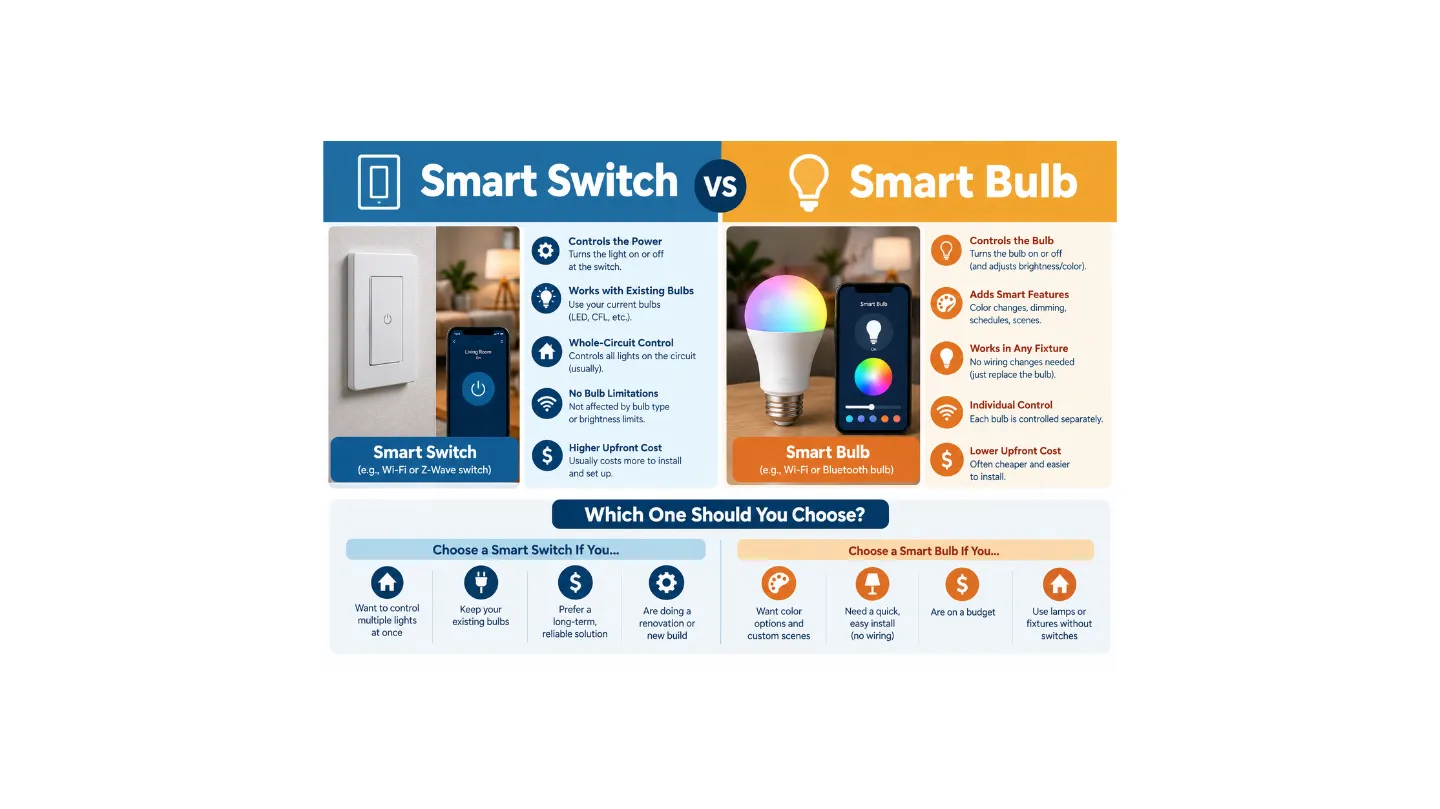
To understand smart switch vs smart bulb, start with how each one works. A smart switch (or smart light switch) replaces your regular wall switch. It connects to your Wi-Fi or a smart home hub, so you can control the lights on that circuit from an app, a voice assistant, or a schedule. You can still use it by hand, just like a normal switch.
Because it controls the power going to the fixture, a smart switch works with the regular LED bulbs you already have. One switch can control one bulb or 10 recessed lights at once. Smart dimmer switches can also dim the lights.
Good to know: Most smart switches need a neutral wire in the switch box. Many homes built before the 1980s don’t have one there. Some brands make models that work without a neutral wire.
What Is a Smart Bulb?
The other side of the smart switch vs smart bulb choice is the bulb itself. A smart bulb (or smart light bulb) is an LED bulb with a tiny radio chip inside. You screw it into a regular socket, pair it with an app, and control it by phone, voice, or schedule. No wiring is needed.
Smart bulbs can do things a smart switch can’t. Many can change color, adjust from warm to cool white (called “tunable white”), and set moods or scenes. Each bulb can be controlled on its own.
The catch: A smart bulb needs power all the time to stay connected. If someone flips the wall switch off, the bulb goes offline, and your app, voice commands, and schedules stop working until the switch is turned back on.
Smart Switch vs Smart Bulb: Quick Comparison
Here’s a side-by-side look at the smart switch vs smart bulb choice.
| Feature | Smart switch | Smart bulb |
|---|---|---|
| Typical price | About $25 to $70 per switch | About $10 to $50 per bulb |
| Installation | Replace the wall switch (wiring needed) | Screw in; no wiring |
| Neutral wire | Usually required | Not needed |
| Bulbs controlled | All bulbs on that switch | One bulb each |
| Works with regular bulbs | Yes | No; each bulb must be smart |
| Color and tunable white | No (dimming only on dimmer models) | Yes, on color or tunable models |
| Wall switch use | Works normally | Must stay on, or the bulb goes offline |
| Easy for guests and kids | Yes | Can be confusing |
| Good for renters | Usually not (needs landlord OK) | Yes; take them with you |
| Wi-Fi devices added | One per switch | One per bulb |
| Best for | Kitchens, living rooms, ceiling lights, recessed lights | Lamps, bedrooms, accent and mood lighting |
Typical retail price ranges. Prices change often.
Smart Switch vs Smart Bulb Pros and Cons
Here’s an honest look at smart switch vs smart bulb pros and cons.
Smart Switch Pros
- Works with any bulb. Keep your regular LED bulbs.
- One switch, many lights. Great for fixtures with several bulbs or rows of recessed lights.
- Always works. The wall switch, app, voice, and schedules all keep working together.
- Easy for everyone. Guests, kids, and older family members just use the switch.
- Cheaper for big rooms. One switch often costs less than buying several smart bulbs.
- Fewer devices on your Wi-Fi. One device per switch instead of one per bulb.
- Long-lasting. You don’t throw away the smart part when a bulb burns out.
Smart Switch Cons
- Wiring required. You need to be comfortable with electrical work or hire an electrician.
- Usually needs a neutral wire. Older homes may not have one in the switch box.
- No color changing. It only turns lights on, off, or dims them.
- Not great for renters. You may need permission to change switches.
- Three-way setups are trickier. Lights controlled from two switches need special companion switches.
Smart Bulb Pros
- Super easy to install. Just screw it in and pair it with an app.
- Color and mood lighting. A color smart light bulb offers millions of colors and warm-to-cool white on many models.
- Control each bulb. Set different lamps to different brightness or colors.
- Great for renters. No wiring, and you can take them when you move.
- Works with lamps. Perfect for table and floor lamps that have no wall switch.
Smart Bulb Cons
- The wall switch problem. If someone turns off the switch, the bulb goes offline.
- Costly for multi-bulb fixtures. A six-light chandelier needs six smart bulbs.
- Replace the whole smart bulb when it fails. You pay for the electronics again each time.
- Can crowd your Wi-Fi. Lots of Wi-Fi bulbs can strain some routers.
- Small standby power use. Smart bulbs use a little power even when “off” in the app.
Smart Bulbs vs Smart Switches Cost
Price is where the smart switch vs smart bulb question gets interesting. At first glance, smart bulbs look cheaper. A smart bulb might cost $15, while a smart switch might cost $35 or more. But the real smart bulbs vs smart switches cost depends on how many bulbs the switch controls.
Example: A Kitchen With 6 Recessed Lights
| Option | What you buy | Approximate cost |
|---|---|---|
| Smart switch | 1 smart switch (keep your 6 regular LED bulbs) | About $35 to $70 |
| White smart bulbs | 6 white smart bulbs at about $15 each | About $90 |
| Color smart bulbs | 6 color smart bulbs at about $35 to $50 each | About $210 to $300 |
For a single lamp, a smart bulb is almost always cheaper. For a room with 3 or more bulbs on one switch, a smart switch usually wins. If you hire an electrician to install a smart switch, add their labor to the cost. Also keep in mind that some smart bulbs and switches need a hub, which can add $50 or more.
Here’s a similar example: a living room with two smart dimmers and ten regular LED bulbs costs about $160, compared with about $250 for ten smart bulbs.
Do Smart Bulbs Raise the Electric Bill?
Only a tiny bit, so energy use shouldn’t decide smart switch vs smart bulb for you. When they’re on, smart bulbs use about the same power as regular LEDs. When “off” in the app, they still draw a small amount of standby power, usually about 0.2 to 0.5 watts per bulb. For example, 20 smart bulbs at 0.5 watts adds up to about 88 kWh a year, or roughly $11 to $13. Smart switches also use a small amount of standby power, but you need far fewer of them. Both use much less energy than old incandescent bulbs.
Are Smart Switches Worth It?
Are smart switches worth it? For most homeowners, yes, especially in rooms you use every day. They make your existing lights smart, work for everyone in the house, and keep working even when someone uses the wall switch. Many experienced smart home users say smart switches are the better long-term choice for most rooms, with smart bulbs saved for lamps and color lighting.
Smart switches are probably not worth it if you rent, if your switch boxes have no neutral wire and you don’t want to rewire, or if you only want to control one lamp.
What Are the Disadvantages of Smart Light Switches?
The main downsides are installation (you need wiring skills or an electrician), the need for a neutral wire in most models, no color-changing features, extra steps for three-way switches, and the fact that they’re a permanent change, which isn’t ideal for renters. Some smart switches also don’t fit well in crowded switch boxes.
Which Is Better: Smart Switch or Smart Bulb?
Which is better, smart switch or smart bulb? It depends on the room and what you want from your lights. Here’s a simple room-by-room guide to the smart switch vs smart bulb choice.
| Room or use | Best choice | Why |
|---|---|---|
| Kitchen | Smart switch | Several ceiling or recessed lights; used by everyone |
| Living room (ceiling lights) | Smart switch or dimmer | Multiple bulbs; easy for guests |
| Living room (lamps) | Smart bulbs | No wall switch; mood lighting |
| Bedroom | Smart bulbs or both | Warm light at night, wake-up light in the morning |
| Kids’ room | Smart switch | Kids use the switch; color bulbs optional in a lamp |
| Hallway and stairs | Smart switch | Often three-way; schedules and motion work well |
| Bathroom | Smart switch | Vanity fixtures have several bulbs |
| Porch and outdoor | Smart switch | Sunset-to-sunrise schedules; works with outdoor bulbs |
| Game room or home theater | Smart bulbs or light strips | Color and scenes |
| Apartment or rental | Smart bulbs | No wiring; take them with you |
Can I Use a Smart Switch and a Smart Bulb Together?
You don’t always have to pick a side in the smart switch vs smart bulb debate. Yes, but not with a regular smart switch that cuts power. If a standard smart switch turns off, your smart bulbs lose power and go offline. If it’s a smart dimmer, dimming the power can also make smart bulbs flicker or behave badly.
Here are ways to use them together the right way:
- “Smart bulb mode” switches: Some smart switches have a setting that keeps power on to the bulbs and sends commands to them instead.
- Wireless smart remotes: Battery-powered smart remotes can stick on the wall and control smart bulbs without cutting power.
- Switch covers: Some products fit over a toggle switch, keep it on, and work as a dimmer knob for smart bulbs.
- Same ecosystem: Using bulbs and switches that support the same platform or the Matter standard makes them easier to link.
This combo gives you the best of both: a real switch on the wall and color-changing smart bulbs.
Do Smart Bulbs Slow Down Wi-Fi?
They can, if you have a lot of them. Each Wi-Fi smart bulb is another device on your network. A few bulbs won’t matter, but many households start seeing issues when they add dozens of devices. Some routers struggle past about 15 to 20 bulbs.
Ways to avoid problems:
- Choose smart switches for multi-bulb fixtures (fewer devices).
- Use bulbs that run on Zigbee, Thread, or Bluetooth with a hub or bridge, instead of Wi-Fi.
- Use a mesh Wi-Fi system in larger homes.
What About Smart Plugs?
A smart plug is a third option beyond smart switch vs smart bulb. You plug it into an outlet, then plug a lamp into it. It turns any regular lamp into a smart lamp, usually for about $10 to $25. Smart plugs are great for table and floor lamps, holiday lights, and fans. They can’t dim lights or change colors, and they don’t work for ceiling fixtures.
| Feature | Smart switch | Smart bulb | Smart plug |
|---|---|---|---|
| Best for | Ceiling and wall-controlled lights | Lamps, color, mood | Lamps and small devices |
| Wiring | Yes | No | No |
| Color | No | Yes (some) | No |
| Dimming | With dimmer models | Yes | Usually no |
Things to Check Before You Buy
Once you’ve made your smart switch vs smart bulb decision, check these details before buying:
- Neutral wire: Turn off the breaker and look in the switch box for a bundle of white wires. If you don’t have one, buy a no-neutral switch or call an electrician.
- Three-way switches: If two switches control the same light, buy a smart switch kit made for three-way setups.
- Dimmer compatibility: Make sure your LED bulbs are dimmable and work with the smart dimmer you choose.
- Your ecosystem: Check that it works with the voice assistant or smart home app you already use, or with the Matter standard.
- Hub or no hub: Wi-Fi devices don’t need a hub. Zigbee, Z-Wave, and some Thread devices do.
- Box size: Smart switches are bulkier than regular switches. Crowded boxes can be a tight fit.
Safety: Always turn off the breaker before working on a switch. If you’re not sure, hire a licensed electrician.
Frequently Asked Questions
Which is better, a smart switch or a smart bulb?
For most rooms with ceiling lights or several bulbs, a smart switch is better and cheaper. For lamps, color lighting, and rentals, a smart bulb is better. Many homes use both.
Are smart switches worth it?
Yes, for most homeowners. They make your existing lights smart, control many bulbs at once, and keep working when people use the wall switch. They’re less worth it for renters or homes without neutral wires.
Do smart bulbs work if the light switch is off?
No. A smart bulb needs constant power. If the wall switch is off, the bulb can’t connect to your app or voice assistant until the switch is turned back on.
Can I use a smart switch and a smart bulb together?
Not with a standard smart switch that cuts power. Use a switch with a “smart bulb mode,” a battery-powered smart remote, or a switch cover that keeps power on to the bulbs.
Do smart bulbs raise the electric bill?
Very little. They use a small amount of standby power, about 0.2 to 0.5 watts each. Twenty bulbs might add around $11 to $13 a year.
Do smart switches need a neutral wire?
Most do. Some brands make no-neutral smart switches for older homes. Check the switch box before buying.
Do smart bulbs slow down Wi-Fi?
A few won’t. Many Wi-Fi bulbs can strain some routers. Using smart switches for multi-bulb fixtures, or bulbs that use a hub, helps avoid this.
Final Verdict: Smart Switch vs Smart Bulb
In the smart switch vs smart bulb debate, there’s no single winner for every room. Smart switches are the best choice for most everyday lighting: kitchens, living rooms, hallways, bathrooms, and anywhere one switch controls several lights. They’re reliable, easy for everyone, and often cheaper. Smart bulbs shine in lamps, bedrooms, and anywhere you want color or mood lighting, and they’re the easy choice for renters.
The smartest plan for many homes is to use both: smart switches on the wall, and smart bulbs where color and individual control matter. Start with one room, see what you like, and build from there.