

When to Aerate Lawn: Best Time by Grass Type, Region, and Month
Your lawn looks thin, puddles stick around after rain, and the grass just won’t thicken up no matter how much you water or feed it. Very often, the problem is hidden under your feet: hard, packed-down soil. Lawn aeration fixes this by pulling small plugs of soil out of the ground so air, water, and food can reach the roots. But aeration only works well if you do it at the right time. Aerate at the wrong time, and you can stress your grass and help weeds take over.
In this guide, we explain when to aerate lawn grass in simple, clear words. You’ll learn the best season and month for your grass type and region, plus the soil temperature to watch. We’ll also cover the 10 signs your lawn needs aeration, how to do it step by step, and what to do right after. You’ll find answers to common questions, like whether it’s too late this year and whether to dethatch or aerate first. By the end, you’ll know exactly when and how to aerate for a thicker, greener lawn.
Quick answer: The best time to aerate depends on your grass type. Aerate cool-season grasses (Kentucky bluegrass, tall fescue, ryegrass) in early fall, about late August to early October, with early spring as a backup. Aerate warm-season grasses (Bermuda, zoysia, St. Augustine, centipede) in late spring to early summer, about May to July. The golden rule: only aerate when your grass is actively growing, so it can heal and fill in the holes fast. Most lawns need it once a year. Heavy clay or high-traffic lawns may need it twice.
What Is Lawn Aeration?
Lawn aeration means making small holes in your lawn so air, water, and nutrients can get down into the soil. Over time, soil gets packed tight from foot traffic, mowing, kids, pets, and heavy rain. Packed soil squeezes out the tiny air spaces roots need to breathe and grow. Roots stay short, water runs off instead of soaking in, and the grass gets weak.
There are two main types of aeration:
- Core aeration (plug aeration): A machine with hollow tubes (tines) pulls out small plugs of soil and grass, usually about 2 to 3 inches deep. This actually removes soil, so it relieves compaction. Lawn experts agree this is the best method for most lawns.
- Spike aeration: A tool pokes holes with solid spikes. It doesn’t remove any soil. It can push soil together around each hole, so many experts say it can make compaction worse on hard ground. Spikes are only okay for light, quick help on loose soil.
You may also see liquid aeration products you spray on the lawn. They are meant to loosen soil over time. They’re easier to use, but there is less proof that they work as well as core aeration on truly compacted soil.
Why Aeration Helps Your Lawn
- Breaks up compacted soil so roots can spread
- Helps roots grow deeper, so your lawn handles drought and heat better
- Lets water soak in instead of running off or puddling
- Helps fertilizer reach the roots
- Helps break down thatch (the layer of dead grass on top of the soil)
- Gives grass seed a great place to sprout when you overseed
When to Aerate Lawn: The Short Answer by Grass Type
The biggest factor in when to aerate lawn grass is the type of grass you have. Grass falls into two groups, and each grows best at a different time of year. You want to aerate right before or during your grass’s strongest growth period, so it can recover quickly.
| Grass type | Common grasses | Best time to aerate | Backup time |
|---|---|---|---|
| Cool-season | Kentucky bluegrass, tall fescue, fine fescue, perennial ryegrass | Early fall (late August to early October) | Early spring (April to May) |
| Warm-season | Bermuda, zoysia, St. Augustine, centipede, bahia, buffalo grass | Late spring to early summer (May to July) | Early summer only, not fall |
Cool-Season Grasses: Aerate in Early Fall
Cool-season grasses grow best when air temperatures are around 60 to 75°F. They grow most in fall and spring and slow down in summer heat. Early fall is the best time to aerate them for several reasons:
- The soil is still warm from summer, which helps roots grow and seed sprout.
- The air is cooler, so grass is less stressed.
- Fall often brings more rain, which helps the holes and new seed.
- Fewer weeds sprout in fall, so new grass has less competition.
- The grass has several weeks of good growing weather to heal before winter.
Spring works too, but it’s second best. Spring aeration can open the door to crabgrass and other summer weeds, and new grass seeded in spring has to survive summer heat with short roots.
Warm-Season Grasses: Aerate in Late Spring to Early Summer
Warm-season grasses love heat and grow best when temperatures are 80 to 95°F. They are brown and dormant in winter and wake up in spring. The best time to aerate them is after they have fully greened up and are growing strong, usually from late spring into early summer.
Don’t aerate warm-season grass in fall. It is getting ready to go dormant, so it can’t heal the holes before winter, and weeds may fill them instead. Also skip early spring, when the grass is still waking up.
When to Aerate Lawn by Region and Month
Your local weather changes the exact timing. Here’s a simple guide for when to aerate lawn grass across the U.S. Use it as a starting point, then watch your own weather and soil.
| Region | Usual grass | Best months |
|---|---|---|
| Northern states (Minnesota, Wisconsin, Michigan, New England, northern plains) | Cool-season | Late August to late September; or late April to May |
| Middle / transition zone (Ohio, Pennsylvania, New Jersey, Maryland, Virginia, Kentucky, Missouri) | Mostly tall fescue and bluegrass; some zoysia or Bermuda | Cool-season: early September to early October. Warm-season: late May to June |
| Southern states (Texas, Florida, Georgia, the Carolinas, Gulf Coast) | Warm-season | May to July |
| Southwest and desert areas | Mostly warm-season | Late spring to early summer, before peak heat |
| Pacific Northwest | Cool-season | September to October; or April to May |
USDA zone tip: In colder zones 3 to 5, aerate in early fall, and add an early spring pass if the soil is very compacted. In zones 6 and 7, fall is best, but spring is fine for high-traffic spots. In zones 8 and 9, aerate in late spring. In zones 10 and 11, aerate around May or June, before the hottest weather. Sandy soils in these warm areas pack down less, so they may only need aeration every 2 to 3 years.
When to Aerate Lawn in Fall: Watch the Soil Temperature
A calendar is helpful, but soil temperature is a better guide, especially if you plan to overseed. Cool-season grass seed sprouts best when the soil is about 50 to 65°F. Many experienced lawn care fans say the sweet spot for fall aeration and overseeding is when soil temperatures drop to about 60 to 70°F at a few inches deep, and daytime air is no longer hot. If it’s still very hot in early September, wait a couple of weeks.
You can check soil temperature with a cheap soil thermometer pushed about 4 inches into the ground. Local weather and farm extension websites often post daily soil temperatures too.
When to Aerate Lawn in NJ, Ohio, Virginia, and Maryland
These states sit in or near the “transition zone,” where both grass types can grow. Most lawns here are tall fescue or Kentucky bluegrass, so early fall is usually best, from about the first week of September to early October. Aim to finish aerating and overseeding at least 45 days before your area’s first hard frost. If your lawn is zoysia or Bermuda, aerate in late May or June instead.
When to Aerate Lawn in MN and Other Northern States
Northern summers end early, so the fall window is earlier too. In Minnesota and similar states, aim for late August to mid-September. This gives new roots time to grow before the ground freezes. Spring aeration, from late April to May once the soil has thawed and dried, is your second choice.
Is It Too Late to Aerate This Year?
This is one of the most common fall questions about when to aerate lawn grass. The answer depends on your goal and your grass.
- If you’re also overseeding cool-season grass: Seed needs about 6 to 8 weeks of growing weather before hard frost to get strong enough for winter. In most northern and middle states, mid-October is about the latest. After that, new seedlings may not survive. You can try “dormant seeding” in late fall instead, where the seed waits in the soil and sprouts in spring.
- If you’re only aerating cool-season grass: You have a little more time. Cool-season grass keeps growing roots until the soil gets cold, so aerating into late October can still help in many areas, as long as the ground isn’t frozen or soggy.
- If you have warm-season grass: Fall is too late. Wait until late spring, when your grass is green and growing again.
Lawn owners in the Deep South have more time in fall for cool-season grass because their frost comes later. When in doubt, check your local first frost date.
When Not to Aerate Your Lawn
Knowing when to aerate lawn grass also means knowing when to skip it. Avoid aerating:
- When the grass is dormant. Brown, dormant grass can’t heal the holes, which stresses it and lets weeds move in.
- During extreme heat or drought. Pulling plugs in hot, dry weather dries out the soil and roots even more.
- When the soil is soaking wet. Wet soil smears and clogs the tines, and machines can pack it down even more. Wait until the ground is moist but not muddy.
- When the soil is bone dry and hard. Tines can’t go deep enough, so you get shallow holes that do little.
- On a brand-new lawn. Wait about one year after laying sod or seeding a new lawn, so the roots can get established.
- Right after applying weed preventer, if you can avoid it. In spring, it’s best to aerate first, then apply pre-emergent weed control. And if you plan to overseed, skip pre-emergent, because it also stops grass seed from sprouting.
- On a moss lawn. If you are purposely growing moss instead of grass, don’t aerate. Moss is happy in compacted soil.
Simple rule: Wet soil and aeration don’t mix. The ideal soil is slightly moist, like a wrung-out sponge.
10 Signs Your Lawn Needs Aeration
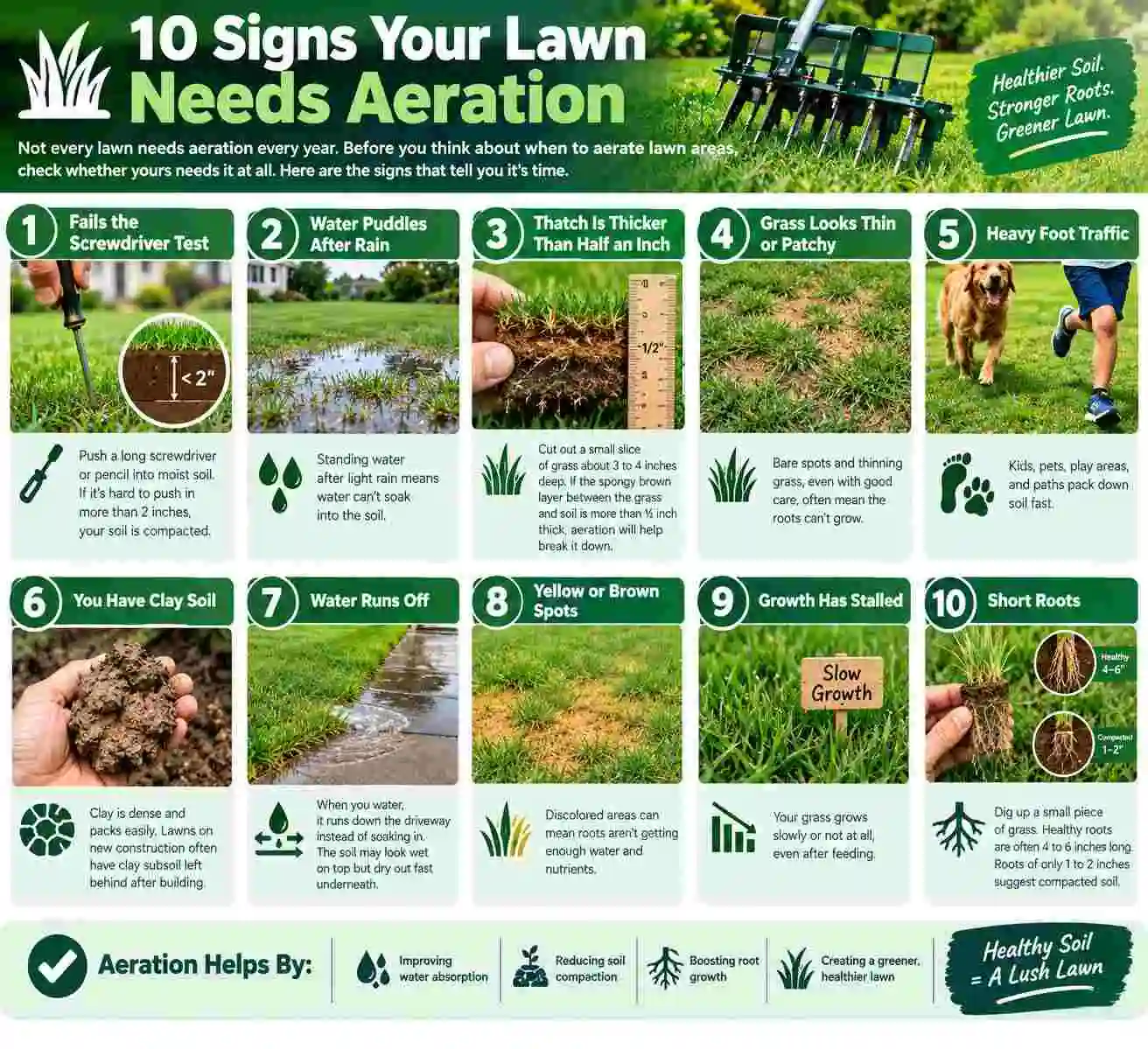
Not every lawn needs aeration every year. Before you think about when to aerate lawn areas, check whether yours needs it at all. Here are the signs that tell you it’s time.
- It fails the screwdriver test. Push a long screwdriver or pencil into moist soil. If it’s hard to push in more than 2 inches, your soil is compacted.
- Water puddles after rain. Standing water after light rain means water can’t soak into the soil.
- Thatch is thicker than half an inch. Cut out a small slice of grass about 3 to 4 inches deep. If the spongy brown layer between the grass and soil is more than ½ inch thick, aeration will help break it down.
- Grass looks thin or patchy. Bare spots and thinning grass, even with good care, often mean the roots can’t grow.
- Heavy foot traffic. Kids, pets, play areas, and paths pack down soil fast.
- You have clay soil. Clay is dense and packs easily. Lawns on new construction often have clay subsoil left behind after building.
- Water runs off. When you water, it runs down the driveway instead of soaking in. The soil may look wet on top but dry out fast underneath.
- Yellow or brown spots. Discolored areas can mean roots aren’t getting enough water and nutrients.
- Growth has stalled. Your grass grows slowly or not at all, even after feeding.
- Short roots. Dig up a small piece of grass. Healthy roots are often 4 to 6 inches long. Roots of only 1 to 2 inches suggest compacted soil.
If you see one or two of these signs, aeration is a good idea at the next right time for your grass. If you see several, make aeration a yearly habit.
How Often Should You Aerate Your Lawn?
How often matters just as much as when to aerate lawn grass. Most lawns do well with core aeration once a year. But it depends on your soil and how you use your yard.
| Lawn situation | How often |
|---|---|
| Heavy clay soil or lots of foot traffic | Once or twice a year (spring and fall for cool-season grass) |
| Average lawn with loam soil | Once a year, or every 1 to 2 years |
| Sandy soil, light use | Every 2 to 3 years |
| Warm-season grasses that spread by runners (Bermuda, zoysia) | Once a year, in early summer |
A former lawn care pro from middle Tennessee shared a helpful approach: picky owners of fescue and bluegrass lawns aerated twice a year, once in early fall and once in late spring to ease winter compaction. Owners on a budget did just the fall aeration, which still gave good results. Don’t overdo it, though. Aerating too often can stress grass and isn’t needed.
How to Aerate Your Lawn Step by Step

Once you know when to aerate lawn grass, the job itself is fairly simple. Here’s how to do it.
- Mark hidden objects. Flag sprinkler heads, shallow irrigation lines, invisible pet fence wires, septic lines, and shallow cable or utility lines. Aerator tines can break them. Call your local “811” dig line a few days ahead if you aren’t sure where buried lines are.
- Water first. Water about 1 inch a day or two before, unless it has rained. Moist soil lets the tines go deeper and pull better plugs.
- Mow a little short. Mow slightly shorter than usual and clear away leaves, sticks, and toys.
- Choose your tool. For small lawns, a manual core aerator (a step-on tool that pulls plugs) works. Small walk-behind aerators about the size of a push mower are also available. For medium to large lawns, rent a gas-powered core aerator from a home or equipment rental store, or hire a lawn care pro.
- Make your passes. Go over the lawn in straight rows, like mowing. Then make a second pass in a different direction, such as crosswise. Some landscape pros make 3 or 4 passes at different angles on very compacted lawns. Aim for holes about 2 to 3 inches deep and 2 to 3 inches apart.
- Focus on problem spots. Give extra passes to high-traffic areas and spots that puddle.
- Leave the plugs. Don’t rake up the soil plugs. Leave them on the lawn, where they break down in a week or two, return nutrients, and help break down thatch.
Money-saving tip: Renting a core aerator for a few hours can cost much less than buying one you’d use once a year. Many homeowners team up with neighbors to share one rental and split the cost. Core aerators are heavy, so bring a helper and a truck or trailer.
Rent, Buy, or Hire?
| Option | Best for | Rough cost |
|---|---|---|
| Manual core aerator | Small lawns and spot areas | About $25 to $60 to buy |
| Rent a gas core aerator | Medium to large lawns, DIY | Often about $60 to $120 for a half or full day |
| Hire a lawn pro | Large lawns or no time | Often about $100 to $250 for an average yard; more with overseeding |
Rough price ranges only. Costs vary by region and lawn size, so check local prices.
What to Do After Aerating
The days right after aeration are the perfect time to give your lawn extra care.
- Overseed right away. The holes are ideal spots for seed to land and touch soil. Spread grass seed the same day or the next day. This is the best way to thicken a thin cool-season lawn.
- Fertilize. Apply a lawn fertilizer, or a starter fertilizer if you overseeded. Nutrients go straight into the holes to the roots.
- Water well. Water deeply after aeration. If you overseeded, keep the top of the soil lightly moist with short daily watering until the new grass is about 2 inches tall.
- Keep traffic light. Stay off the lawn as much as you can for a few weeks, especially new seed.
- Mow normally. You can mow as usual once the plugs dry. If you overseeded, wait until new grass reaches mowing height.
Should You Dethatch or Aerate First?
If your lawn needs both, dethatch first, then aerate, then overseed and fertilize. Dethatching removes the thick mat of dead grass so the aerator tines can reach the soil, and so seed can land on soil instead of thatch.
But many lawns don’t need separate dethatching at all. If your thatch is under ½ inch, core aeration alone helps break it down over time. Dethatching is rough on grass, so do it only during the strong growing season for your grass type, the same timing as aeration.
When to Aerate Lawn and Overseed
For cool-season lawns, the best time to aerate and overseed together is early fall, from late August to early October, while the soil is warm and the air is cool. Aerate first, then spread seed right after. For warm-season lawns, aerate in late spring to early summer. Most warm-season grasses spread on their own by runners, so they need overseeding less often. If you do seed, do it in late spring or early summer, when soil temperatures are 65 to 70°F or higher.
Spring vs. Fall Aeration: Which Is Better?
| Factor | Fall | Spring |
|---|---|---|
| Best for | Cool-season lawns (first choice) | Cool-season backup; warm-season (late spring) |
| Weed risk | Low; fewer weeds sprout | Higher; crabgrass and summer weeds can fill holes |
| Overseeding success | High; seedlings grow before winter | Lower; seedlings face summer heat |
| Soil moisture | Usually good | Can be too wet early in spring |
Some gardeners, especially in Canada and the UK, prefer spring aeration or even late-winter aeration on mild, slightly moist days. That can work in cooler, wetter climates. For most U.S. cool-season lawns, though, early fall gives the best results.
Common Aeration Mistakes to Avoid
- Aerating at the wrong time, such as warm-season grass in fall
- Aerating wet, muddy soil, which can make compaction worse
- Using spike aerators on heavily compacted soil
- Making only one light pass, which leaves too few holes
- Raking up the soil plugs instead of leaving them
- Forgetting to mark sprinkler heads and buried lines
- Applying weed preventer right before you overseed
- Aerating more often than your lawn needs
Frequently Asked Questions
When to aerate lawn grass for the best results?
Aerate when your grass is actively growing and the soil is slightly moist. That means early fall for cool-season grass and late spring to early summer for warm-season grass.
What month should I aerate my lawn?
For cool-season grass, September is usually the best month, with late August to early October as the full window. April or May is the spring backup. For warm-season grass, aerate from May to July.
How early is too early to aerate a lawn?
It’s too early if the ground is still frozen, muddy, or the grass hasn’t started growing. For cool-season lawns in spring, wait until you’ve mowed at least two or three times. For warm-season lawns, wait until the grass is fully green.
How do I tell if my lawn needs aeration?
Try the screwdriver test. If a screwdriver is hard to push into moist soil, the soil is compacted. Other signs include puddles, thin or patchy grass, thatch over ½ inch, heavy foot traffic, and clay soil.
Should you dethatch or aerate first?
Dethatch first, then aerate, then overseed and fertilize. If thatch is less than ½ inch thick, you can usually skip dethatching and just core aerate.
Is it better to aerate in spring or fall?
Fall is better for cool-season grasses because there are fewer weeds and new seed grows well. Late spring to early summer is better for warm-season grasses.
How often should I aerate my lawn?
Once a year for most lawns. Clay soil or high-traffic lawns may need it twice a year. Sandy, lightly used lawns may only need it every 2 to 3 years.
Should I water before aerating?
Yes. Water about 1 inch a day or two before, so the soil is moist but not soggy. This helps the tines go deeper.
Should I pick up the plugs after aerating?
No. Leave them on the lawn. They break down in a week or two and return nutrients to the soil.
Can you aerate a lawn too much?
Yes. Aerating more than your lawn needs can stress the grass. Once or twice a year is plenty for almost any home lawn.
Final Thoughts
So, when to aerate lawn grass? It comes down to your grass type. Aerate cool-season lawns in early fall, with early spring as a backup. Aerate warm-season lawns in late spring to early summer, once they’re green and growing. Always aerate when the grass is actively growing and the soil is moist but not soaking wet.
Use core aeration, make at least two passes, leave the plugs, and follow up with seed, fertilizer, and water. If you aren’t sure your lawn needs it, try the screwdriver test first. Do it at the right time each year, and you’ll have deeper roots, fewer puddles, and a thicker, greener lawn.