How to Seal Granite Countertops? Easy Step-by-Step Guide
Granite countertops are tough, beautiful, and built to last for decades. But granite is a natural stone, and like most natural stone, it has tiny pores that can soak up oil, wine, coffee, and water. Over time, that can lead to dark spots and stains that are hard to remove. The good news is that sealing granite is one of the easiest DIY jobs in your kitchen. With a bottle of sealer, a few clean cloths, and about an hour of work, you can protect your counters for months or even years.
In this guide, we explain how to seal granite countertops in plain, simple words. You’ll learn how to test whether your granite needs sealing, how to clean and prep it, and exactly how to apply sealer step by step. We’ll also cover how often to seal granite countertops, which type of sealer to use, and how to fix streaks and haze. You’ll find costs for DIY vs. hiring a pro, plus the most common mistakes and answers to popular questions. By the end, you’ll know exactly how to keep your granite looking new.
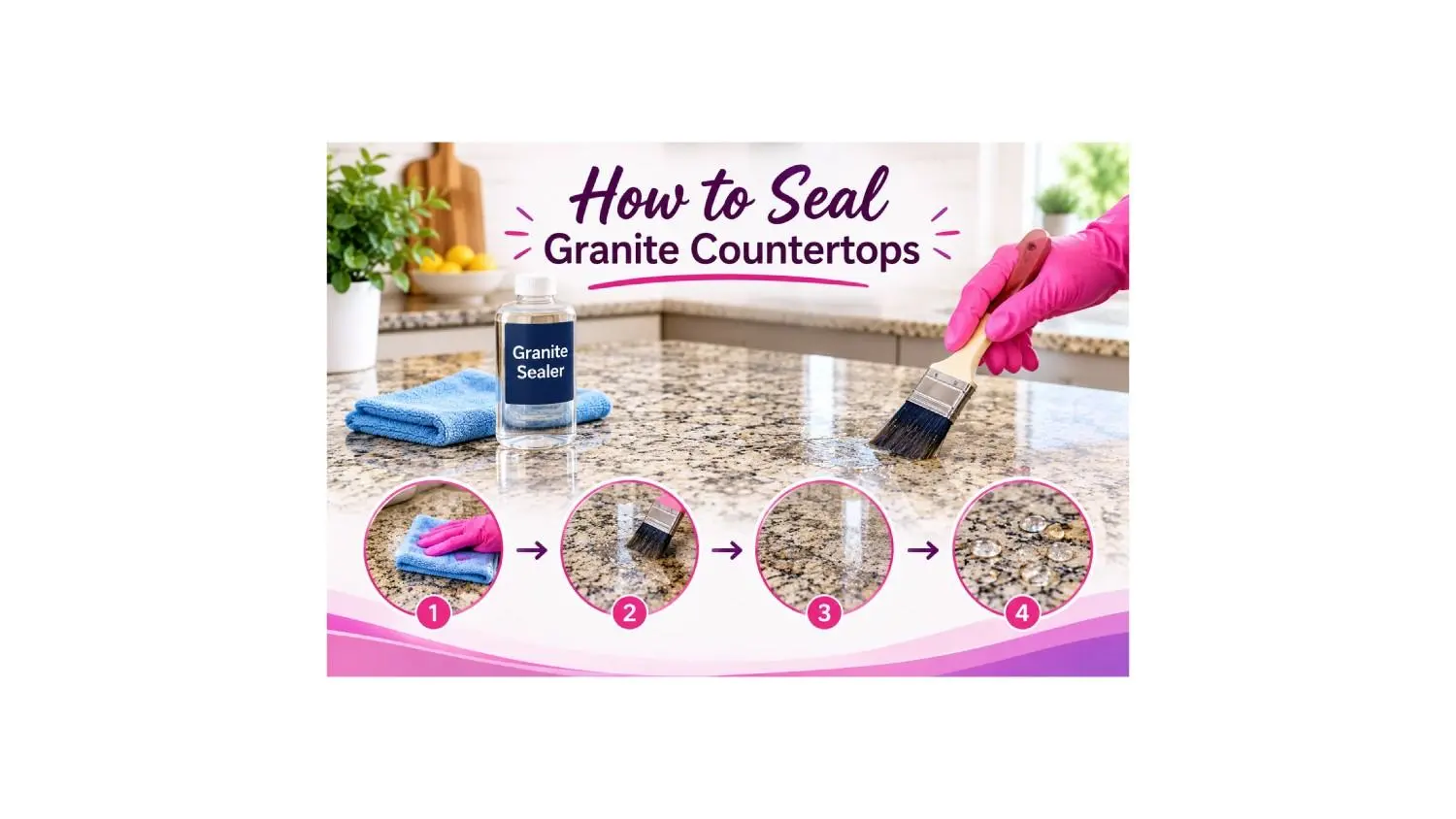
Quick answer: To seal granite countertops, (1) do a water test to see if your stone needs it, (2) clean the counters with mild soap and water and let them dry completely, ideally overnight, (3) apply a penetrating granite sealer in small sections, keeping the surface wet for the time on the label (usually 3 to 20 minutes), (4) add a second coat on porous areas, (5) wipe off all excess sealer before it dries, and (6) let it cure for 24 hours before using water or cleaners. Most granite needs resealing about once every 1 to 3 years.
Why Seal Granite Countertops?
Before you learn how to seal granite countertops, it helps to know why it matters. Granite is very hard and scratch-resistant, but it isn’t solid like glass. It’s made of mineral crystals with tiny spaces between them. Liquids can seep into those spaces and leave stains. A granite sealer soaks into the pores and fills them, so spills sit on top long enough for you to wipe them up.
Sealing helps:
- Prevent oil, wine, coffee, and juice stains
- Stop water rings and dark spots around the sink
- Keep the stone looking clean and even in color
- Make daily cleaning easier
Important: Sealing makes granite stain-resistant, not stain-proof. Spills can still soak in if left for hours. Sealing also doesn’t protect against scratches, heat, or etching from acids, and it won’t add shine on its own.
Do Granite Countertops Really Need to Be Sealed?
Most do, but not all. Knowing how to seal granite countertops is useful for nearly every homeowner, but granite varies a lot in porosity:
- Light-colored granites (whites, creams, light grays) are often more porous and may need sealing more often.
- Dark, dense granites (many blacks and deep greens) absorb very little and may rarely need sealing.
- Resin-treated granite: Many slabs are treated with resin at the factory to fill pits and pores. They may need less frequent sealing, but they still benefit from testing.
The only way to know for sure is to test your counters.
Step 1: Do the Water Test
Before learning how to seal granite countertops, find out whether yours need it right now.
- Pour a small puddle of water, about the size of a quarter or about 3 inches wide, onto the counter.
- Wait 15 to 30 minutes.
- Wipe it up and look at the spot.
| What you see | What it means |
|---|---|
| Water beads up and the stone stays the same color | Sealer is working. No sealing needed yet. |
| Stone darkens slowly after 10 to 30 minutes | Sealer is getting weak. Plan to seal soon. |
| Stone darkens within a few minutes | Granite is porous and needs sealing now. Plan on 2 or more coats. |
| Stone darkens almost instantly | Very porous stone or no sealer at all. Seal now with multiple coats. |
Test several spots, especially around the sink, near the stove, and in front of the coffee maker, since these areas wear out first.
Oil test (optional): Place a few drops of cooking oil or mineral oil on an out-of-the-way spot for 10 to 15 minutes. If it leaves a dark mark, your stone absorbs oil easily and needs sealing. Wipe it right away.
What You’ll Need
The supply list for how to seal granite countertops is short and cheap:
- A penetrating (impregnating) granite or natural stone sealer
- Mild dish soap or a pH-neutral stone cleaner
- Several clean, lint-free microfiber or terry cloths
- Rubber or nitrile gloves
- Painter’s tape (optional, to protect cabinets and backsplash)
- Good ventilation (open windows or run a fan)
How to Seal Granite Countertops: Step-by-Step
Here’s how to seal granite countertops from start to finish. Always read your sealer’s label first, since dwell times and coat counts vary by product.
Step 2: Clear and Clean the Countertops
The first rule of how to seal a granite countertop is to start with a clean surface. Remove everything from the counters, including appliances, dish racks, and decor. Clean the surface well with warm water and a little mild dish soap, or a stone-safe cleaner. A simple homemade cleaner works well too: mix 1 teaspoon of dish soap and 2 tablespoons of rubbing (isopropyl) alcohol in a pint-size spray bottle and fill it with cool water.
Avoid: vinegar, lemon juice, bleach, ammonia, glass cleaner, and abrasive scrubbers. These can dull the stone or break down sealer.
Remove stains first. Sealer locks in whatever is in the stone. If you have oil stains or water marks, remove them with a stone poultice before sealing.
Step 3: Let the Granite Dry Completely
This step is easy to rush, but it matters. Water trapped in the pores keeps sealer from soaking in and can cause cloudy spots. Let the counters dry for at least 2 to 12 hours, and ideally overnight (about 12 to 24 hours), especially around the sink. A ceiling fan can help. Seal at normal room temperature, not in extreme heat or cold.
Step 4: Test a Small Hidden Area
Apply a little sealer to a hidden spot, like a corner behind the coffee maker. Let it dry and check that it doesn’t change the color or leave a film. This is especially important with “enhancing” sealers, which darken stone on purpose.
Step 5: Apply the Sealer in Sections
- Put on gloves and open windows for ventilation.
- Shake the bottle lightly.
- Work in small sections, about 2 to 3 feet at a time.
- Spray or pour the sealer evenly across the section, then spread it with a clean cloth so the whole surface is wet. Don’t skimp; the stone should look evenly wet.
Step 6: Let It Soak In
Let the sealer sit for the time listed on the label. This is usually about 3 to 5 minutes for some products and up to 15 to 20 minutes for others. Keep the surface wet during this time. If areas start to dry, add more sealer. Light foaming or bubbling is normal on some stones.
Step 7: Apply a Second Coat If Needed
Porous or light-colored granite often needs two or more coats. Many products say to apply the second coat while the first is still wet, a few minutes after the first. Others say to wait an hour or more between coats. Follow your label.
Don’t forget the edges. Countertop edges and the cut edges under the sink lip are often more absorbent. Give them at least two applications, until they stop soaking in liquid.
Step 8: Wipe Off All Excess Sealer
This is the step most people get wrong when learning how to seal granite countertop surfaces. Before the sealer dries on the surface, wipe away all extra with a clean, dry, lint-free cloth. Then buff with a second dry cloth until the surface feels smooth and looks even. Sealer is meant to be in the stone, not on top of it. Leftover sealer dries into a sticky, hazy film.
Move to the next section and repeat until all counters are done. Overlap the edges of each section slightly so you don’t miss spots.
Step 9: Let It Cure
Keep the counters dry and free of heavy items for at least 24 hours. Most sealers need about 24 hours to bond, and some take 48 to 72 hours to fully cure. Avoid setting wet dishes or using cleaners during this time.
Step 10: Test Again
After the sealer cures, repeat the water test. If water now beads up, you’re done. If some spots still darken, apply another coat to those areas.
How Often to Seal Granite Countertops
One of the most common questions after learning how to seal granite countertops is how often to do it. There’s no single answer, because it depends on the stone, the sealer, and how much you use your kitchen.
| Granite type or use | How often to seal |
|---|---|
| Light-colored, porous granite in a busy kitchen | About every 6 to 12 months |
| Average granite, normal use | About every 1 to 2 years |
| Dense, dark granite | Every 3 to 5 years, or only when the water test fails |
| Bathroom vanities and low-use areas | Every 2 to 3 years or as needed |
| Outdoor kitchen granite | About yearly, since sun and weather wear sealer faster |
Many homeowners simply seal once a year as a habit, and some homeowners say they reseal busy kitchens about every 6 months and never have stain problems. The best rule: do the water test every few months, and seal whenever water starts darkening the stone. Spring or fall, when temperatures are mild and humidity is lower, is a good time.
How Often Do You Need to Seal Granite Countertops Near the Sink?
Knowing how often to seal granite countertops near the sink is important. The area around the sink and cooktop gets the most water, soap, and scrubbing, so its sealer wears out first. Test these spots more often, and you can reseal just these areas between full sealings.
Choosing the Right Granite Sealer
Picking the right product is a big part of how to seal granite countertops successfully.
| Sealer type | How it works | Best for |
|---|---|---|
| Penetrating (impregnating) sealer | Soaks into pores and blocks liquids from inside the stone; doesn’t change the look | Kitchen and bath countertops (best choice for most people) |
| Water-based penetrating sealer | Lower odor and fewer fumes | Indoor kitchens; people sensitive to smells |
| Solvent-based penetrating sealer | Often soaks deeper into dense stone; stronger odor | Dense granite; ventilated areas |
| Color-enhancing sealer | Deepens and enriches the color, like a “wet look” | Dull or faded stone, if you want a darker look |
| Topical (coating) sealer | Forms a film on top | Not recommended for kitchen granite; can scratch, peel, and trap moisture |
| Spray-on “clean and seal” products | Light sealer mixed into a cleaner | Maintenance between full sealings, not a replacement |
Tips for choosing a sealer:
- Look for a label that says “penetrating” or “impregnating” and “for natural stone” or “granite.”
- Check that it’s safe for food prep surfaces once cured.
- Pick spray bottles for small kitchens and pour bottles for large areas.
- Higher-quality sealers often last longer, which means less frequent resealing.
Can You Seal Granite Countertops Naturally?
There’s no true “natural” sealer that protects granite like a penetrating stone sealer. Some people wipe on mineral oil or wax, but these only darken the stone for a short time, attract dust, and can leave a sticky film. Wax and oil can also block a real sealer from soaking in later. If you want fewer chemicals, choose a water-based, low-odor penetrating sealer.
How to Fix Haze and Streaks After Sealing
Even when you know how to seal granite countertops, haze can happen. If you see a cloudy, hazy, or sticky film, extra sealer dried on the surface. To fix it:
- Apply a little more sealer to the hazy area. This re-wets and softens the dried residue.
- Wipe it off right away with a clean, dry cloth and buff firmly.
- For stubborn haze, many sealer makers suggest buffing with a small amount of acetone or mineral spirits on a cloth. Test in a hidden spot first and ventilate well.
- Sealer drips on faucets or cabinets should be wiped right away. If they’ve dried, re-wet with sealer and wipe.
How to Strip and Reseal Granite Countertops
Penetrating sealers wear away over time, so you can usually just clean and reseal. Stripping is only needed if:
- A topical coating, wax, or old sealer has built up and looks cloudy or peels
- Haze or sticky residue won’t buff off
- A new sealer won’t soak in because old products are blocking the pores
To strip, use a stripper made for natural stone or, for light buildup, acetone on a clean cloth, following the product directions. Rinse, let the stone dry for 24 hours, and then reseal. For heavy buildup, a stone restoration pro can strip and reseal safely.
How to Seal Granite Countertops for the First Time
New counters are usually sealed by the installer, but not always. Ask your fabricator whether the stone was sealed and with what. If you’re not sure, do the water test a week or two after installation. Brand-new granite that has never been sealed may need two or three coats to fully protect it. Pay special attention to edges, sink cutouts, and seams.
Can I Seal My Granite Countertops Myself?
Yes. Learning how to seal granite countertops yourself is a simple DIY project. It takes about 30 minutes to an hour of hands-on time for most kitchens, plus drying and curing time. No special tools are needed.
Consider hiring a pro if your counters have deep stains, heavy etching, chips, or a cloudy buildup, or if you want them polished and restored at the same time.
How Much Does It Cost to Seal Granite?
| Option | Typical cost |
|---|---|
| DIY sealer (one bottle covers most kitchens) | About $15 to $40 |
| Professional sealing | Often about $150 to $400 for an average kitchen |
| Pro cleaning, stain removal, polishing, and sealing | Often about $300 to $800+ |
Rough national ranges. Pricing depends on countertop size, stone condition, and your area.
Common Mistakes When Learning How to Seal Granite Countertops
- Sealing granite that’s still damp from cleaning
- Sealing over stains, which locks them in
- Letting excess sealer dry on the surface
- Using a topical coating instead of a penetrating sealer
- Skipping the edges and sink cutout
- Using the counters before the sealer cures
- Cleaning with vinegar, bleach, or ammonia, which wears down sealer faster
- Sealing in very hot, cold, or humid conditions
- Sealing too often when the stone doesn’t need it, which can cause buildup and haze
How to Keep Granite Protected Between Sealings
- Wipe spills right away, especially oil, wine, coffee, and citrus.
- Clean daily with mild soap and water or a pH-neutral stone cleaner.
- Use cutting boards, coasters, and trivets.
- Don’t leave wet sponges, soap bottles, or oil bottles sitting on the counter.
- Do a quick water test every few months near the sink and stove.
Frequently Asked Questions
How to seal a granite countertop for beginners?
Clean the counter, let it dry overnight, apply a penetrating granite sealer in small sections, keep it wet for the label’s time, wipe off all excess, and let it cure for 24 hours. Then do a water test to check that it worked.
How often should you seal granite countertops?
Most granite countertops need sealing about every 1 to 3 years. Light, porous granite in busy kitchens may need it every 6 to 12 months, while dense dark granite may go several years. Do a water test to decide.
How often do you need to seal granite countertops if they’re new?
New granite is often sealed at installation. Test it a week or two later and again every few months in the first year. After that, reseal whenever the water test shows the stone darkening.
Do granite countertops really need to be sealed?
Most do, because granite is porous and can stain. Very dense granites and resin-treated slabs may rarely need it. The water test tells you for sure.
Can I seal my granite countertop myself?
Yes. It’s an easy DIY job that needs only a granite sealer, gloves, and clean cloths. Most kitchens take under an hour of work, plus 24 hours to cure.
How much does it cost to have granite resealed?
A professional usually charges about $150 to $400 for an average kitchen. DIY sealer typically costs about $15 to $40 per bottle.
How to seal granite countertop edges and sink cutouts?
Edges and the cut stone under an undermount sink lip absorb more liquid. Apply at least two coats there, keeping the stone wet, until it stops soaking in sealer, then wipe off the excess.
How long does granite sealer take to dry?
Most sealers are dry to the touch in an hour or two but need about 24 hours to cure. Some take up to 72 hours to fully cure. Keep water and heavy items off during curing.
Is granite sealer food safe?
Most granite sealers made for countertops are considered safe for food prep surfaces once they’re fully cured. Check the label, and wait the full cure time before preparing food directly on the counter.
What happens if you don’t seal granite?
Porous granite can absorb oil, wine, coffee, and water, leading to dark stains and water marks. Dense granite may be fine for longer, but most kitchen granite looks better and lasts longer with sealing.
Final Thoughts
Now you know how to seal granite countertops the right way. Start with a simple water test. If the stone darkens, clean it, let it dry completely, apply a penetrating sealer in sections, keep it wet for the label’s time, and wipe off every bit of excess. Give it 24 hours to cure, then test again.
As for how often to seal granite countertops, most need it every 1 to 3 years, with busy, light-colored counters needing it more often. Keep up with gentle daily cleaning and quick spill cleanup, and your granite will stay beautiful, stain-resistant, and easy to care for for decades.